Women’s Health in Venezuela After Maduro’s Capture
After Maduro’s January 2026 capture and a major US oil deal, Venezuela’s public health system continues to offer free gynecology campaigns yet remains constrained by medicine shortages, power cuts, emigrated specialists and a restrictive abortion law. Maternal mortality stood at ~227 per 100,000 in 2023.
GLOBAL NEWS · RESEARCH BRIEFING
Women’s Health in Venezuela After Maduro’s Capture: Oil Deals,
Earthquakes and Access to Gynecological Care
For publication on gynecology.hospital Editorial Team · 13 October 2026 · Category: Global News / Women’s Health |
On 3 January 2026 United States special forces entered a residential compound in Caracas and removed President Nicolás Maduro and his wife, Cilia Flores. Within hours Delcy Rodríguez, the vice-president, was sworn in as acting head of state. By August the Trump administration had announced a 100-year concession over 17 oil fields holding roughly 65 billion barrels, with the Pentagon taking a 35 percent stake in the private company managing them. Oil production has since climbed toward 1.2 million barrels a day. At the same time, twin earthquakes in June 2026 killed thousands and damaged already fragile hospitals along the coast. Nine months later the question for clinicians is narrower than the geopolitics: can women still reach a gynecologist, obtain contraception, or deliver a baby without paying in dollars they do not have?
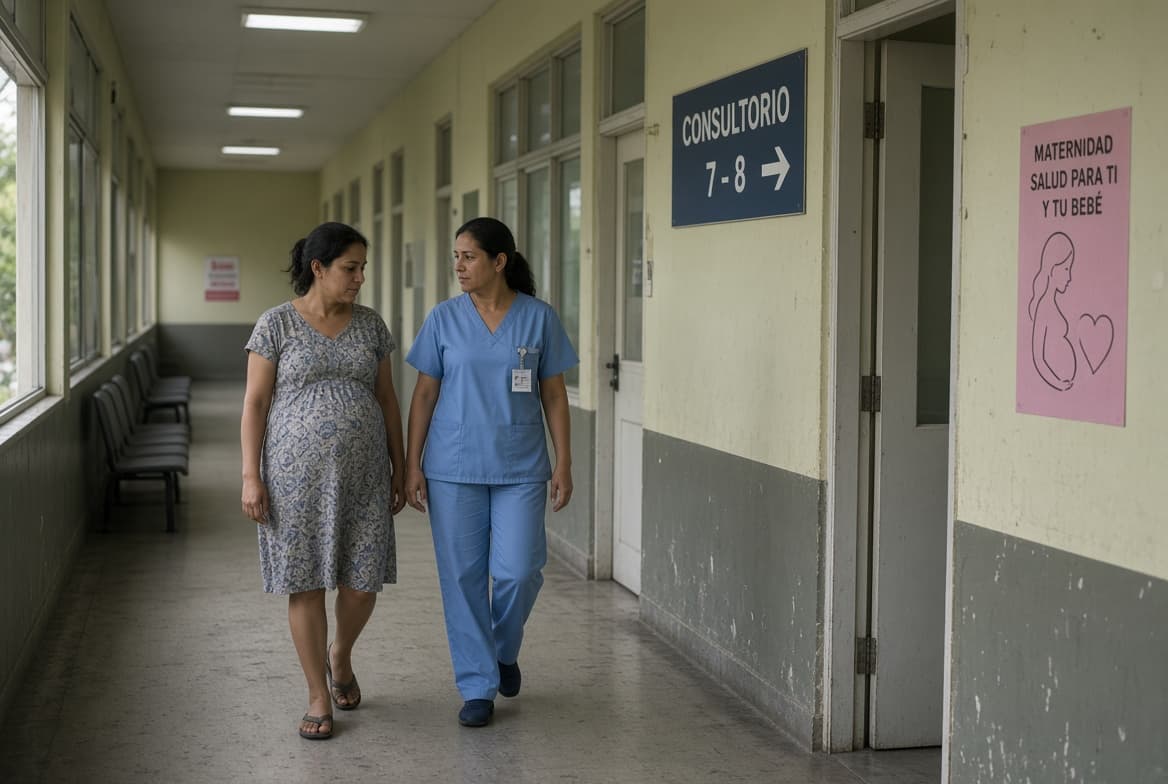
The short answer is that the public system continues to function in patches and campaigns, but the structural shortages that predated the January raid have not been reversed. Independent reports and humanitarian assessments show long waiting lists, out-of-pocket costs for basic tests, and persistent gaps in medicines and power. Official “Mes Rosa” and Gran Misión Venezuela Mujer drives offer free cytology, pelvic ultrasound and subdermal implants in selected communities; patients outside those days still face the same constraints that have defined Venezuelan reproductive care for a decade.
The state after January: continuity under new constraints
Rodríguez’s government has not dismantled the institutional architecture of the previous administration. The armed forces, intelligence services and the bulk of the civil service remain in place. Dialogue with parts of the opposition has produced limited agreements on judicial independence, yet no election date has been set. Foro Penal continues to record hundreds of political prisoners. In health, the same ministries that organized outreach campaigns under Maduro are still running them. What has changed is the fiscal backdrop: US-supervised oil sales are expected to generate revenue, some of which is earmarked for public salaries and services, but the money has not yet translated into reliable stocks of oxytocin, misoprostol for postpartum hemorrhage, or contraceptive implants in ordinary hospital pharmacies.
Power supply remains a daily variable. An ANOVA survey found that nearly two-thirds of households experienced daily electricity cuts in 2026, up from 37 percent in 2024. Hospitals that depend on generators for operating theatres and cold chains for vaccines report intermittent service. The oil-sector recovery itself competes for electricity; fields cannot be rationed without losing production, so residential and smaller clinical loads absorb the shortfall.
Access to gynecological and maternity care
Most women who give birth still do so in a facility. Guttmacher Institute estimates for 2024 put the share of births outside a health facility at roughly 1 percent and the share of women receiving fewer than four antenatal visits at 7 percent. Those figures describe the women who reach care, not the women who postpone visits because transport is unreliable or because a cytology kit must be bought privately. Independent monitoring in Caracas in 2025 found that a basic public gynecology consultation could cost the equivalent of US$22 once transport and incidental fees were included—more than a month’s official minimum wage. Appointments at the Hospital Universitario de Caracas were being scheduled months ahead.
Specialized units exist. The Ministry of Health has stated that 28 dedicated women’s units operate in type-3 and type-4 hospitals and diagnostic centers. In October 2026 the Hospital Universitario announced that its gynecology operating theatre was handling 95 percent of the specialty’s procedures, including minimally invasive myomectomy. These centers are real; the bottleneck is the queue and the consumables. Cytology slides, ultrasound gel, suture material and anesthesia drugs are still supplied unevenly. Women who need more complex oncology work or fertility-preserving surgery are frequently referred onward, only to discover that the receiving hospital also requires the patient to bring her own supplies.
Key practical barriers reported in 2025–2026:
Out-of-pocket costs for tests, medicines and transport even in “free” public facilities.
Long waiting times for routine gynecology and for cytology results.
Shortage of modern contraceptives in public pharmacies; private-sector implants cost US$90 or more.
Power interruptions that close operating rooms or spoil refrigerated stocks.
Emigration of specialists: roughly a third of the medical workforce left during the long crisis; salaries for remaining public-sector doctors remain low.
Post-earthquake damage: PAHO assessments found that of 356 facilities surveyed after the June 2026 quakes, only 61 percent were operational; 23 were newly inoperative and 117 had been out of service beforehand.
Contraception, abortion and the legal frame
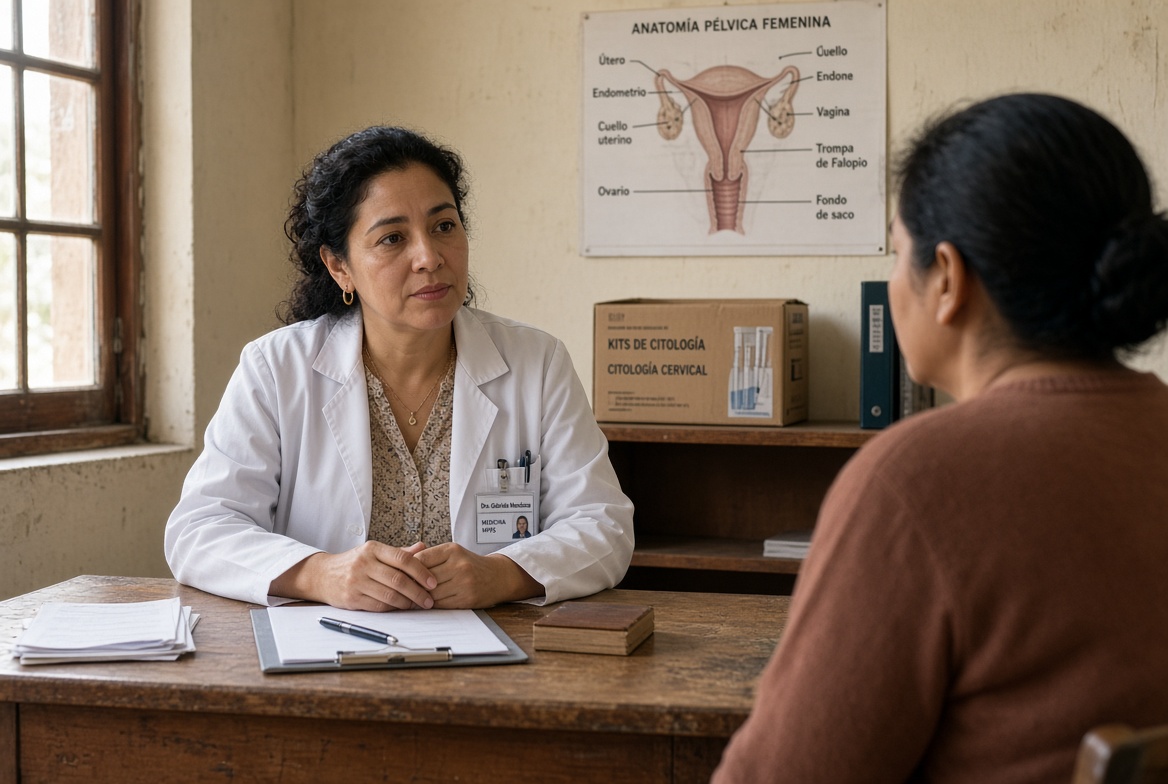
Abortion remains criminalized except when the woman’s life is at risk and a medical board approves the procedure. In practice the exception is rarely used; providers cite the absence of clear protocols and the risk of prosecution. The result is a steady flow of unsafe procedures that contribute to maternal mortality. Colombia, long a destination for Venezuelan women seeking legal abortion, has itself seen legislative moves to restrict access, narrowing one external option. Medication abortion pills circulate informally; their quality and dosing are uncontrolled.
Modern contraceptive use is reported as high in national surveys—Guttmacher 2024 data show roughly 94 percent of women aged 15–49 using a modern method among those who use any method—but unmet need remains, particularly among adolescents and poorer women. Public hospitals frequently limit family-planning consultations to counseling because the methods themselves are not in stock. Subdermal implants are placed during ministry campaigns; between campaigns the same implant is sold in pharmacies at a price that excludes most salaried workers. Emergency contraception is available in theory but subject to the same supply gaps.
Government response and humanitarian support
The acting government has continued the outreach model established under the previous administration. Gran Misión Venezuela Mujer and the October “Mes Rosa” campaign deploy mobile teams offering free gynecology, mastology, pelvic ultrasound, cytology and subdermal implants in community settings. In early October 2026 such jornadas were reported in Caracas parishes and in Sucre state, with claims of hundreds or thousands of services delivered. These events reach women who would not otherwise enter a hospital queue; they do not solve the day-to-day emptiness of hospital pharmacies.
UNFPA continues to support sexual and reproductive health services, including post-earthquake distribution of reproductive-health kits to 16 facilities and assistance for tens of thousands of women.
PAHO and the IFRC have supplied emergency obstetric and primary-care materials and helped re-establish field clinics in the hardest-hit coastal areas.
The Ministry of Health has announced plans to rehabilitate prioritized hospitals and import advanced imaging equipment; independent verification of sustained supply chains remains limited.
Maternal mortality, the clearest single indicator of system performance, stood at approximately 227 deaths per 100,000 live births in the 2023 UN inter-agency estimates—well above the regional average for Latin America and more than three times the SDG target of 70. Earlier peaks during the hyperinflation years were higher still. No public 2024–2025 series has yet revised that figure downward. The earthquakes added an acute layer: UNFPA estimated that more than 36,000 pregnant women were affected, of whom roughly 4,000 were expected to deliver within a month of the disaster, in a network already short of staff and sterile supplies.
What the data imply for clinical practice
A Venezuelan patient presenting abroad may have incomplete antenatal records, delayed cytology, and a history of self-managed or informal abortion. Screen for anemia, hypertension and infection without assuming prior continuous care.
Contraceptive counseling should include the possibility that her preferred method is unavailable at home and that she may need a supply sufficient for several months.
Power and water interruptions remain common; any procedure that depends on continuous electricity or sterile processing carries elevated risk inside the country.
Official campaigns improve episodic access but do not replace a reliable primary-care network. Patients who miss a jornada return to the same queues.
Nine months after the removal of Maduro, Venezuela’s oil revenue is rising under a US-supervised arrangement, and the acting government continues to stage free gynecology days. The underlying constraints—emigrated specialists, intermittent power, empty public pharmacies and a restrictive abortion law—have not been lifted. Women still deliver in hospitals when they can reach them; they still pay for tests that are officially free; and they still face a legal barrier to safe abortion. The political transition has changed who negotiates the oil contracts. It has not yet changed the distance between a woman and the next functioning operating room.
Sources
International Crisis Group, Atlantic Council and House of Commons Library briefings on the January 2026 capture of Maduro, the Rodríguez interim government, and the August 2026 oil agreement (NABEP / Pentagon 35 percent stake, ~65 billion barrels).
OPEC and industry reporting on Venezuelan production recovery to approximately 1.2 million barrels per day by August 2026.
Guttmacher Institute, Adding It Up 2024: contraceptive use, unmet need and facility delivery estimates for Venezuela.
UN Maternal Mortality Estimation Inter-Agency Group / UNICEF: maternal mortality ratio approximately 227 per 100,000 live births in 2023.
UNFPA Venezuela and UNFPA earthquake situation reports (2026): support to 16 facilities, reproductive-health kits, pregnant women affected by the June quakes.
PAHO Situation Report #11 (18 September 2026) on post-earthquake health-facility assessments: 356 facilities surveyed, 61 percent operational.
Independent reporting (Crónica Uno, 2025) on out-of-pocket costs for public gynecology consultations and contraceptive stock-outs; Ministry of Health statements on 28 specialized women’s units and Hospital Universitario operating-theatre capacity (October 2026).
ANOVA Policy Research survey on electricity cuts (nearly two-thirds of households daily in 2026); FIGO and Lancet commentary on pre-existing health-system collapse.
Research briefings by the gynecology.hospital editorial team summarise published studies and official data, and list their sources at the end of each article.