Unsafe Abortion in Restrictive and Low-Income Settings
Roughly 45 percent of abortions are unsafe, with 97 percent occurring in developing countries. In highly restrictive settings only about one in four abortions is safe. Economic hardship and legal barriers drive women to clandestine providers, producing preventable maternal deaths and millions of hospitalizations each year.

GLOBAL NEWS · RESEARCH BRIEFING
When Safe Care Is Out of Reach: Why Women in Economically Strained and Restrictive Settings Turn to Unsafe Abortion
Legal barriers, cost, stigma, and the persistence of clandestine procedures with measurable health consequences
For publication on gynecology.hospital Editorial Team · 16 October 2026 · Category: Global News / Unsafe Abortion |
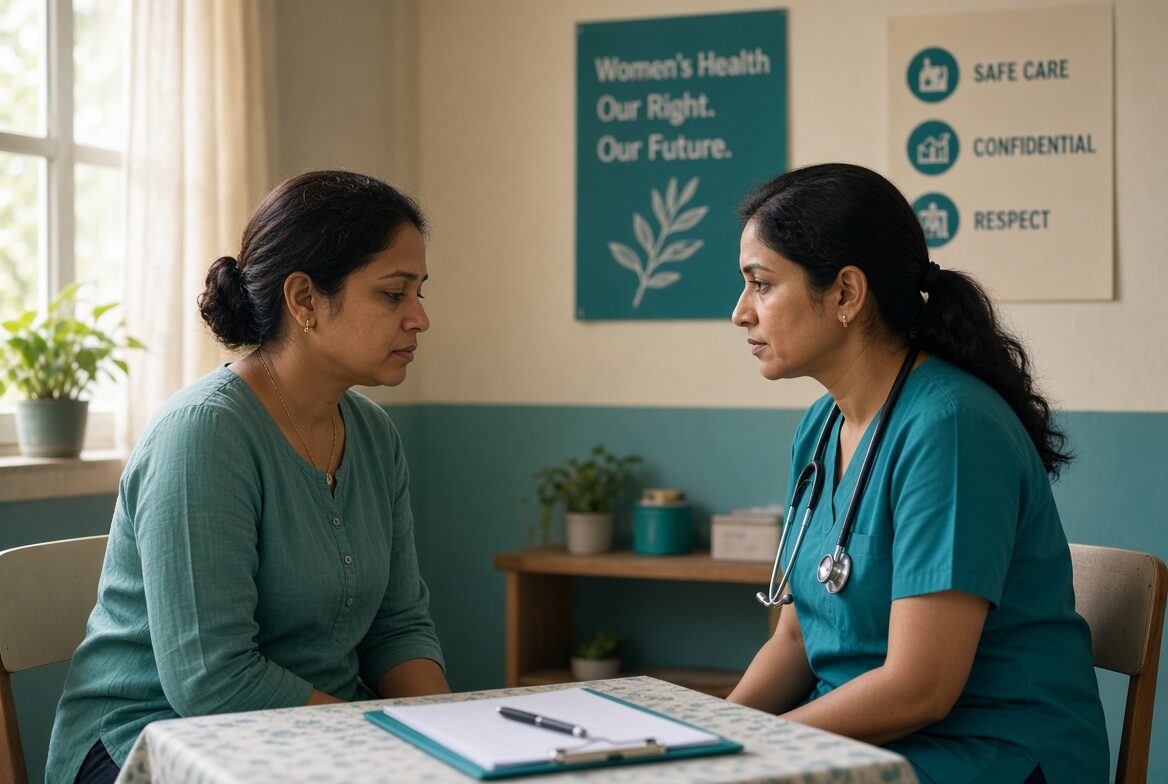
Approximately 45 percent of all abortions worldwide are unsafe, and 97 percent of those unsafe procedures occur in developing countries. The proportion is markedly higher where laws are restrictive: WHO and Lancet analyses show that in countries with the most restrictive abortion laws only about one in four abortions is safe, compared with nine in ten where abortion is available on request. Women in economically strained settings and under restrictive legal regimes continue to seek termination; when formal services are unavailable or unaffordable they turn to clandestine providers, untrained individuals, or self-managed methods that carry elevated risks of hemorrhage, infection, and incomplete abortion. Restrictive laws do not eliminate abortion; they shift it outside regulated care.

Scale and geography of unsafe abortion
Global estimates from 2010–2014 (still the most comprehensive comparative figures available) indicate that of 55.7 million abortions annually, 25.1 million were unsafe. In sub-Saharan Africa roughly three-quarters of abortions were unsafe; similar majorities appear in parts of Latin America and Central and South Asia. More recent WHO summaries note that between 4.7 and 13.2 percent of maternal deaths are attributable to unsafe abortion, equating to tens of thousands of deaths each year, almost all in developing regions. In sub-Saharan Africa the case-fatality rate for unsafe abortion is several times higher than in regions where most procedures are safe. Country examples illustrate the pattern: Pakistan records high abortion rates despite narrow legal grounds, with complications contributing to roughly 10 percent of maternal deaths; Zimbabwe sees abortion-related complications accounting for an estimated 25 percent of maternal deaths; Iran reports hundreds of thousands of illegal procedures annually under restrictive rules.

What drives women to clandestine care
Several interlocking factors push women toward unsafe methods:
Legal prohibition or narrow grounds (life only, or life and health) that make formal care unavailable or expose both women and providers to criminal penalties.
Direct cost: safe procedures in private facilities can exceed several days’ or weeks’ wages for low-income women; public services, where they exist, may still involve informal fees, travel, or waiting periods.
Stigma and fear of exposure, which delay care-seeking and favor secrecy over regulated clinics.
Geographic and infrastructural barriers: rural women and those in conflict or economically collapsed settings have limited access to trained providers even when the law permits abortion on some grounds.
Economic hardship itself: qualitative studies in Iran and elsewhere list unemployment, inability to support another child, and uncertainty about the future as primary reasons for seeking termination outside the system.

Health and system consequences
Unsafe abortion produces both immediate clinical harm and longer-term burdens. Complications include severe hemorrhage, uterine perforation, sepsis, and chronic pelvic pain or infertility. WHO estimates that about 7 million women in developing countries are hospitalized each year for treatment of unsafe-abortion complications. The direct cost of treating major complications was estimated at more than US$550 million annually in earlier calculations; the figure understates lost productivity and the personal financial strain on families. Historical cases such as Romania under the Ceaușescu-era ban showed sharp rises in maternal mortality driven largely by unsafe clandestine procedures; rates fell rapidly once restrictions were lifted. Contemporary data from Latin America and Africa continue to show that poorer and younger women bear a disproportionate share of severe morbidity.

Women in economically constrained environments and under restrictive legal regimes do not stop seeking abortion. They obtain it under conditions that increase the risk of death and serious injury. Expanding access to safe, affordable methods—whether through legal reform, broader interpretation of existing health exceptions, or reliable supply of quality-assured medication—reduces the volume of unsafe procedures and the preventable morbidity that follows. Until those options are widely available, clandestine care will remain the default for large numbers of women who cannot afford or cannot safely reach regulated services.
Sources
World Health Organization. Abortion fact sheet and Preventing unsafe abortion. Estimates of unsafe abortion proportion, maternal mortality contribution, and hospitalizations.
Ganatra B et al. Global, regional, and subregional classification of abortions by safety, 2010–14. Lancet. 2017.
Guttmacher Institute analyses of abortion incidence and safety by legal status and region.
Country-level reports: Pakistan, Zimbabwe, Iran, and historical Romania data on clandestine abortion and maternal mortality.
WHO Abortion Care Guideline (2nd ed.) on legal and service barriers.
Research briefings by the gynecology.hospital editorial team summarise published studies and official data, and list their sources at the end of each article.