Poland Abortion Reform 2026: Sejm Votes and Likely Veto
On 20 October 2026 Poland's Sejm passed two narrow bills: one restoring termination for severe fetal abnormality, struck down by the 2020 Constitutional Tribunal ruling, and one removing prison terms for assisting an abortion. President Karol Nawrocki opposes liberalization and the coalition lacks the votes to override a veto, so practical change for women may remain limited.

Poland’s Sejm Approves Limited Abortion Reforms as Presidential Veto Looms
October 2026 Analysis | Evidence-Based Review of Recent Legislative Developments
Abstract
On 20 October 2026, Poland’s Sejm, the lower house of parliament, passed two bills intended to loosen the country’s near-total abortion ban. One measure would restore the legal ground for termination in cases of severe and irreversible fetal abnormality that was eliminated by a 2020 Constitutional Tribunal ruling. The other would remove criminal penalties of up to three years’ imprisonment for assisting a woman in obtaining an abortion outside the narrow existing legal limits. Both bills now move to the Senate and, if approved, to President Karol Nawrocki, who has repeatedly stated his opposition to any liberalization of abortion rules. This article examines the precise content of the votes, the political arithmetic that produced the narrow majorities, the expected presidential response, public opinion data, and the practical implications for women’s access to care.
1. Background: From the 1993 Compromise to the 2020 Ruling
For nearly three decades, Polish abortion law rested on the 1993 Family Planning Act, commonly described as the “abortion compromise.” Under that framework, termination was permitted in three circumstances: when the pregnancy resulted from a criminal act such as rape or incest (up to 12 weeks); when it threatened the woman’s life or health; and when prenatal tests indicated a high probability of severe and irreversible fetal impairment or an incurable illness threatening the fetus’s life. In practice, the fetal-anomaly ground accounted for the large majority of the roughly 1,000 legal hospital procedures performed each year.
In October 2020 the Constitutional Tribunal, then dominated by judges appointed under the Law and Justice (PiS) government, ruled that the fetal-anomaly ground violated the constitutional protection of life. The judgment took effect in January 2021. Legal hospital abortions fell sharply—from more than 1,000 in 2019–2020 to 107 in 2021 and 161 in 2022. Although numbers later recovered somewhat (approximately 425 in 2023 and around 890 in 2024), the great majority of abortions in Poland continue to occur outside the formal system, either through medication obtained online or by travel to neighboring countries. Activists estimate the true annual total at 100,000–120,000.
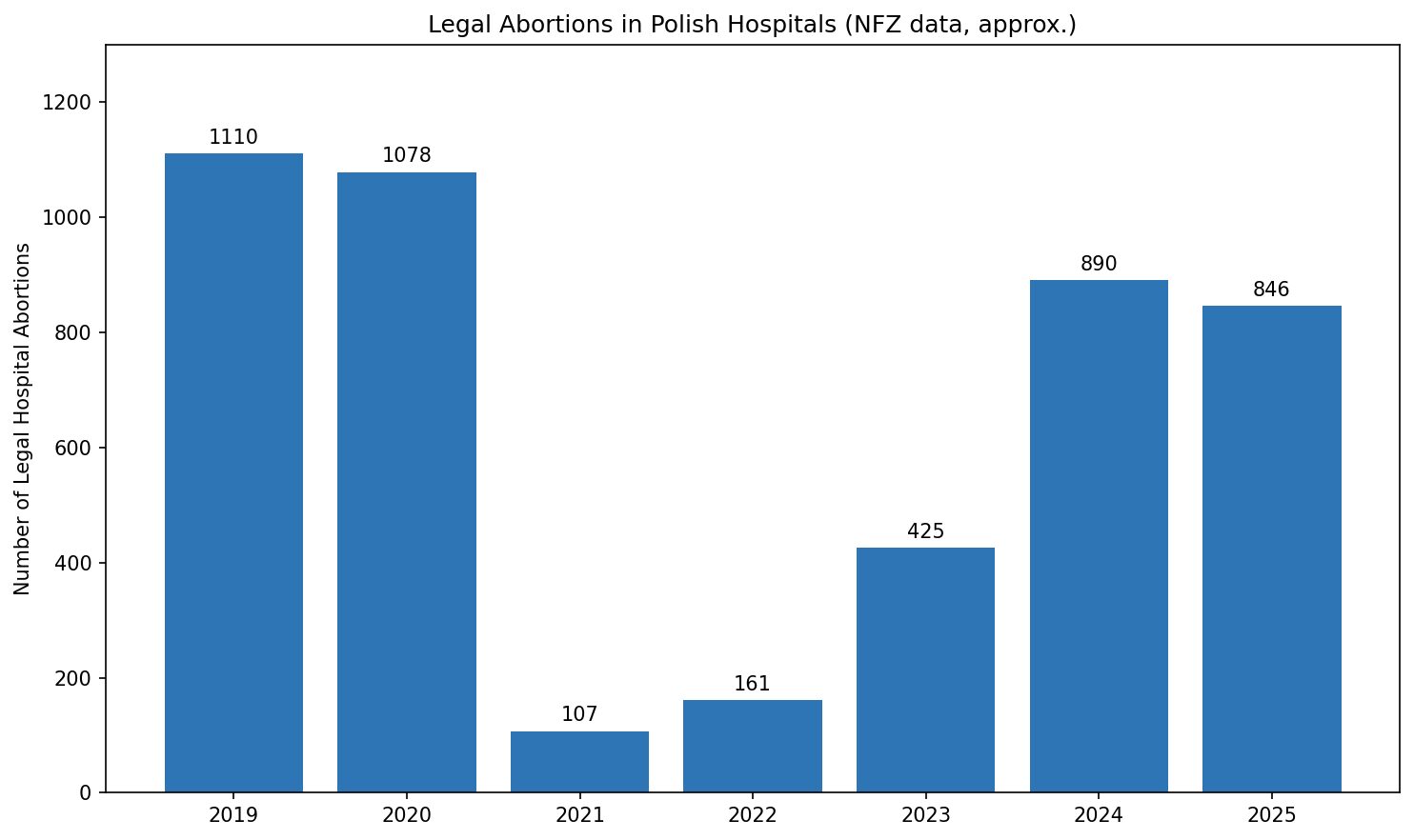
Figure 1. Legal hospital abortions reported via the National Health Fund (approximate figures). Source: NFZ data compiled by Polish media and activist groups.
2. The 20 October 2026 Sejm Votes
Two separate bills reached the floor after spending roughly two years in committee. The first amended the Criminal Code. It repealed provisions that imposed up to three years’ imprisonment on anyone who terminated a pregnancy with the woman’s consent outside the statutory grounds, or who assisted or encouraged such a termination. It also clarified that physicians, nurses, and midwives would not face liability when a termination was performed to avert a threat to the woman’s life or health or when tests indicated severe fetal abnormality. This bill passed by 217 votes to 213, with three abstentions—a margin of four votes.
The second bill amended the Family Planning Act to restore the fetal-anomaly ground that the Tribunal had struck down. Termination would again be lawful when medical examinations indicated a high probability of severe and irreversible impairment or an incurable condition threatening the fetus’s life, up to the point of viability. It also introduced procedural requirements, including deadlines for hospitals and written explanations when a lawful procedure is refused. This measure passed more comfortably: 233 in favor, 203 against, and one abstention.
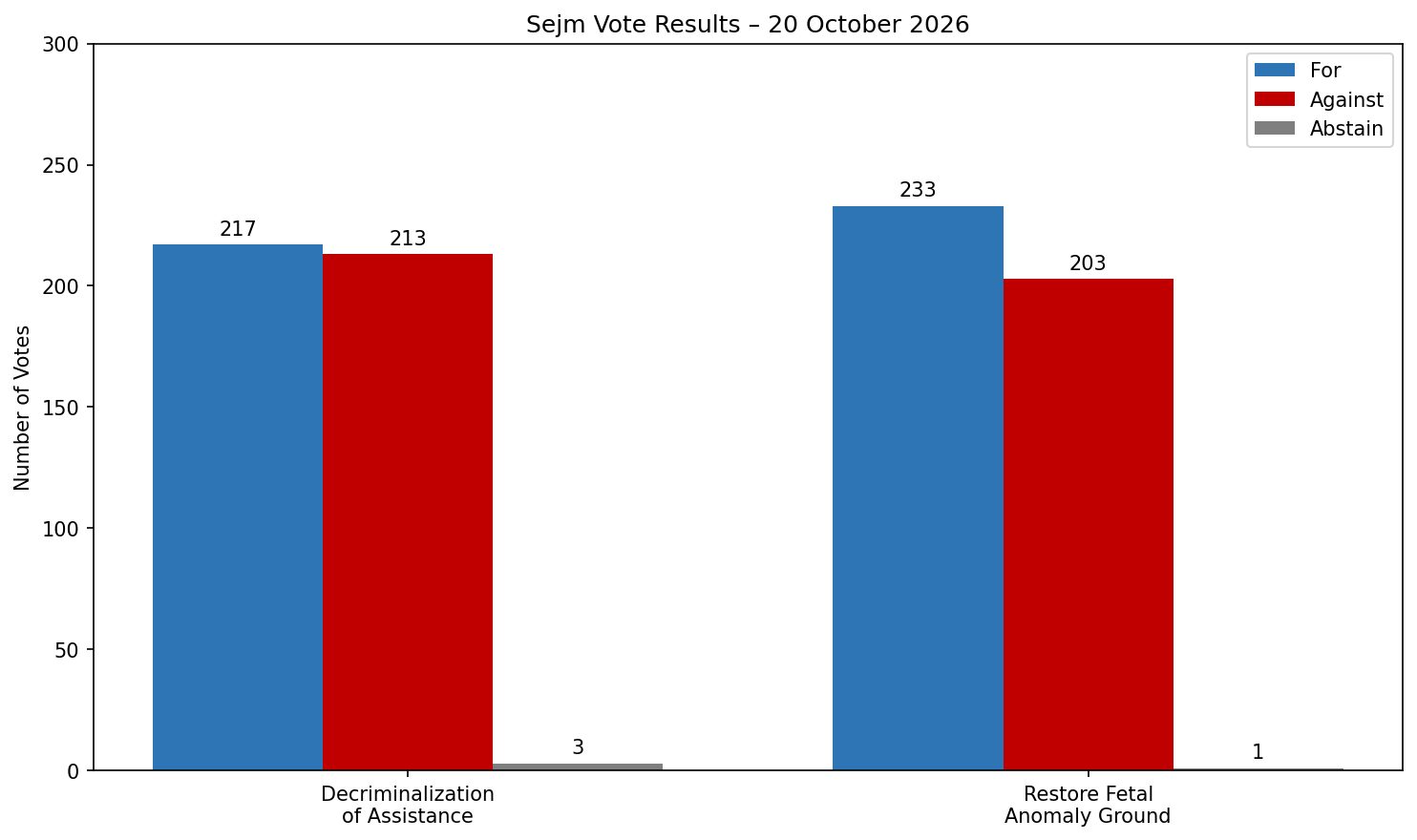
Figure 2. Sejm vote tallies on 20 October 2026. Sources: Polish Press Agency (PAP), Notes from Poland, POLITICO.
Support for both bills came primarily from Prime Minister Donald Tusk’s Civic Coalition, The Left, and the small Together party. The more conservative partners in the governing coalition—especially the Polish People’s Party (PSL)—split. Fourteen PSL deputies, including Deputy Prime Minister Władysław Kosiniak-Kamysz, voted against the decriminalization measure. On the fetal-anomaly bill the opposition within the coalition was smaller. Absences also mattered: 27 deputies did not vote on the criminal-code amendment, including ten from PiS and party leader Jarosław Kaczyński. Had those deputies participated, the outcome could easily have been reversed.
3. What the Bills Would and Would Not Change
Even if both bills survive the Senate and receive the president’s signature, Poland’s legal framework would remain among the most restrictive in the European Union. Abortion on request up to 12 weeks—the position favored by Tusk’s Civic Coalition and The Left during the 2023 campaign—would still be unavailable. Women themselves are already exempt from criminal liability for ending their own pregnancies; the criminal-code changes would mainly protect those who assist them and certain medical professionals acting under the restored fetal-anomaly ground or existing life/health grounds.
Leah Hoctor of the Center for Reproductive Rights described the package as “a very small-scale change” that would “change very little for most women in Poland who need abortion care.” Groups such as Legalna Aborcja noted that women requiring care immediately would see no practical difference. The measures do not create a right to publicly funded abortion on broader grounds, nor do they remove the conscience clause that allows individual physicians and institutions to refuse participation.
4. Political Arithmetic and the Expected Veto
The narrow margins reflect deep divisions inside the governing coalition. After a similar decriminalization attempt failed in July 2024 (218–215), Tusk himself acknowledged that a broader reform lacked a majority in the current parliament. The October 2026 votes therefore represent the most limited package capable of attracting enough support from the center-right partners.
President Karol Nawrocki, elected in 2025 with the backing of PiS, has consistently stated that he supports the protection of life “from conception to natural death.” His chief of staff, Zbigniew Bogucki, reiterated this position immediately after the Sejm votes. Nawrocki has already vetoed a record number of government bills. Overriding a presidential veto requires a three-fifths majority in the Sejm—approximately 276 votes—which the current coalition does not possess. Observers therefore treat a veto (or referral of the bills to the Constitutional Tribunal) as the most likely outcome.

The Sejm chamber, where the October 2026 votes took place (illustrative).
5. Public Opinion and Street Mobilization
A SW Research poll conducted for Rzeczpospolita on 20–21 October 2026 found that 67.2 percent of respondents favored some form of liberalization. Support was higher among women (73.8 percent) than men (60.3 percent). When asked about specific options, 37.7 percent preferred abortion on demand up to 12 weeks, while 29.5 percent preferred a return to the pre-2020 “compromise.” Only 16.2 percent wished to retain the current law, and 6 percent wanted it tightened further.
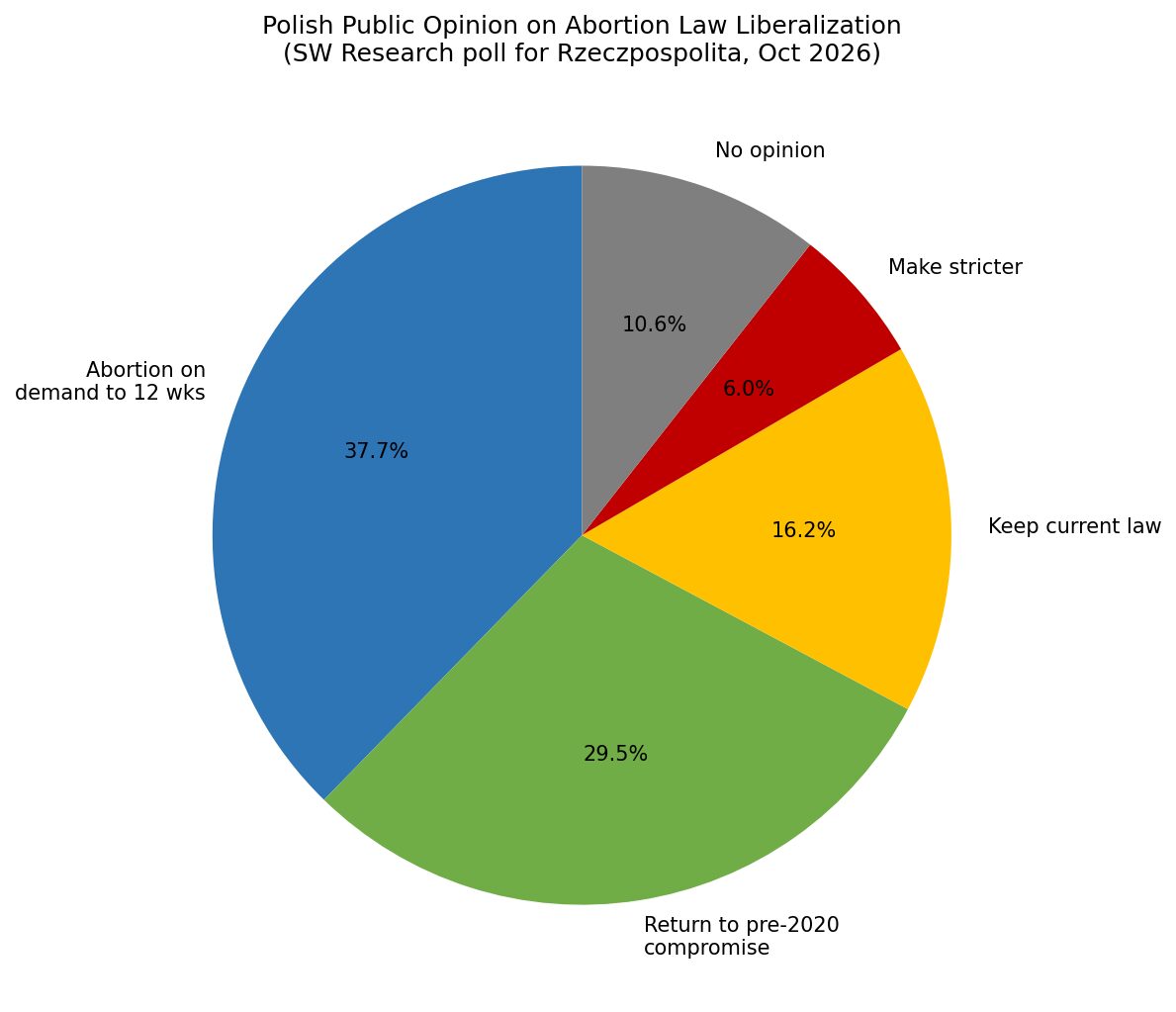
Figure 3. Preferences for abortion-law change. SW Research poll for Rzeczpospolita, October 2026 (n=800).
On 22–23 October, the sixth anniversary of the 2020 Tribunal ruling, protests took place in more than twenty cities. In Warsaw a few hundred people gathered outside parliament holding red cards—the symbol used to warn the government that it risks electoral punishment in 2027. Larger turnouts were reported in Wrocław (around 1,000) and other regional centers. The demonstrations were substantially smaller than the mass mobilizations of 2020, which contributed to PiS’s eventual loss of power, yet they underscored continuing dissatisfaction with the pace of reform.
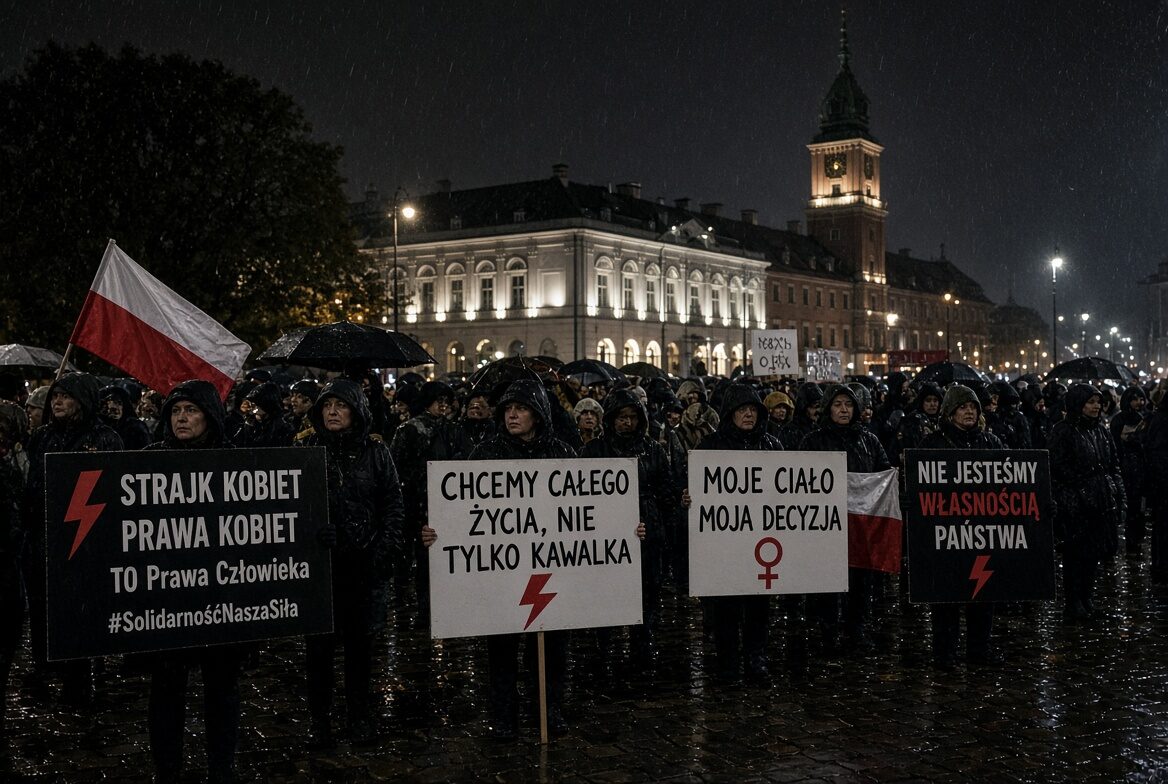
Protesters in Warsaw on the anniversary of the 2020 ruling (illustrative).
6. Implications for Women’s Health and Access
Under the current law, legal abortion is available only when the pregnancy threatens the woman’s life or health or results from a crime. In practice, access remains uneven. Regional disparities are pronounced; some voivodeships record almost no hospital procedures. Many women continue to rely on self-managed medication abortion or travel. Delayed care in cases of severe fetal anomaly has been documented, and physicians remain cautious because of residual legal risk.
Restoration of the fetal-anomaly ground would, if enacted, allow terminations that are currently unavailable in Poland for conditions such as anencephaly or severe genetic disorders. Decriminalization of assistance would reduce the chilling effect on those who help women obtain medication or travel information. Neither change, however, addresses the broader absence of abortion on request or the systemic barriers created by conscience-based refusals. For most women seeking termination for socioeconomic or personal reasons, the practical situation would remain largely unchanged.
7. Outlook
The bills are expected to pass the Senate, where the governing coalition holds a clearer majority. Their subsequent fate rests with President Nawrocki. A veto would return the measures to the Sejm, where the coalition lacks the votes to override. In that case, the 2020 legal framework will remain in force until at least the next parliamentary election, scheduled for late 2027.
The October 2026 votes therefore mark a symbolic rather than an immediate practical shift. They demonstrate that a parliamentary majority can be assembled for limited reform, yet they also illustrate the institutional and political constraints that have so far prevented broader change. For clinicians, advocates, and women seeking care, the coming weeks will clarify whether these limited measures survive or whether the status quo continues.
References
POLITICO, “Poland’s government votes to ease abortion laws in challenge to conservative president,” 20 October 2026.
Notes from Poland, “Parliament approves liberalisation of Poland’s abortion laws,” 21 October 2026.
The Guardian, “Poland’s parliament votes to ease abortion ban but faces likely veto from president,” 21 October 2026.
Notes from Poland, “Protesters return to Poland’s streets demanding liberalisation of abortion law,” 23 October 2026.
Notes from Poland / Rzeczpospolita, SW Research poll for Rzeczpospolita, 20–21 October 2026.
Polish Press Agency (PAP) and National Health Fund (NFZ) data on legal abortions, 2019–2025, as reported by Polish media.
Center for Reproductive Rights statements, October 2026.
This analysis is based on publicly reported parliamentary votes, official statements, and peer-reviewed or institutional data available as of 27 October 2026. It does not constitute legal advice.
Research briefings by the gynecology.hospital editorial team summarise published studies and official data, and list their sources at the end of each article.