PCOS and Global Obesity: Trends, Links, and Risks
Global analyses estimate 65–69 million women with PCOS in 2021, with prevalence rising ~28% since 1990. 50–70% of women with PCOS are overweight or obese. The relationship is bidirectional and mediated by insulin resistance, driving higher diabetes risk especially in obese subgroups. Weight management remains central to care.

GLOBAL NEWS · RESEARCH BRIEFING
Polycystic Ovary Syndrome and the Global Rise in Obesity: Epidemiological Trends, Bidirectional Links, and Metabolic Consequences
What large-scale burden studies, prevalence meta-analyses, and metabolic research show about PCOS in the context of rising overweight and obesity
For publication on gynecology.hospital Editorial Team · 18 October 2026 · Category: Global News / Reproductive Endocrinology |
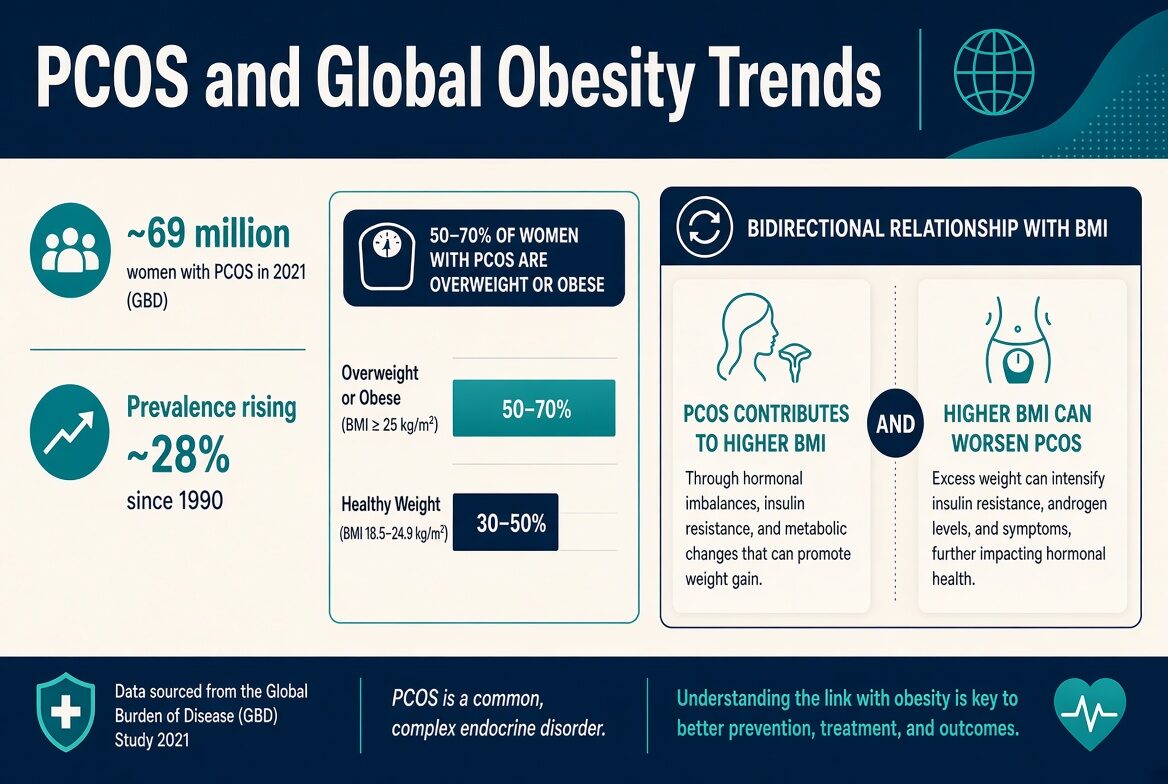
Polycystic ovary syndrome (PCOS) is one of the most common endocrine disorders in women of reproductive age. Global Burden of Disease (GBD) analyses place the number of women living with PCOS at approximately 65–69 million in 2021, with age-standardized prevalence rates having risen roughly 27–28 percent since 1990. A substantial share of this burden is intertwined with the worldwide increase in overweight and obesity. Approximately 50–70 percent of women with PCOS are overweight or obese, and the relationship is bidirectional: higher BMI increases the likelihood of developing or expressing PCOS, while the hormonal and metabolic features of PCOS promote further weight gain. Insulin resistance sits at the center of this cycle and drives elevated risks of type 2 diabetes and other cardiometabolic conditions, particularly among women with higher body weight.
Global burden and prevalence estimates
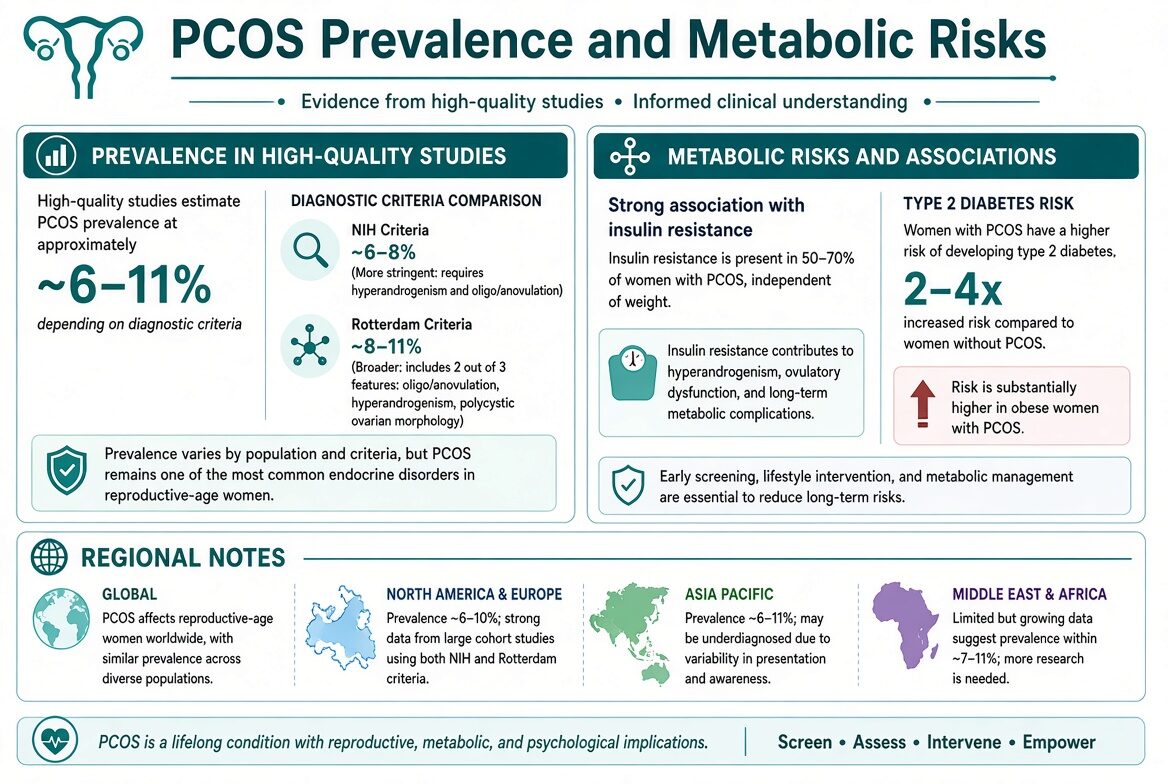
High-quality epidemiological studies that apply standardized diagnostic criteria report prevalences in the range of approximately 6–11 percent, depending on whether the more restrictive NIH criteria or the broader Rotterdam criteria are used. Regional variation exists, but high-quality analyses suggest that once study quality is controlled, large differences across WHO regions diminish. Absolute case numbers have grown markedly because of population growth, improved diagnosis, and the concurrent rise in obesity. Southeast Asia and several middle-SDI regions have shown some of the fastest increases. Peak prevalence and incidence often appear in the late teens and early twenties, reflecting both biological onset and the timing of clinical recognition.
The bidirectional relationship with obesity
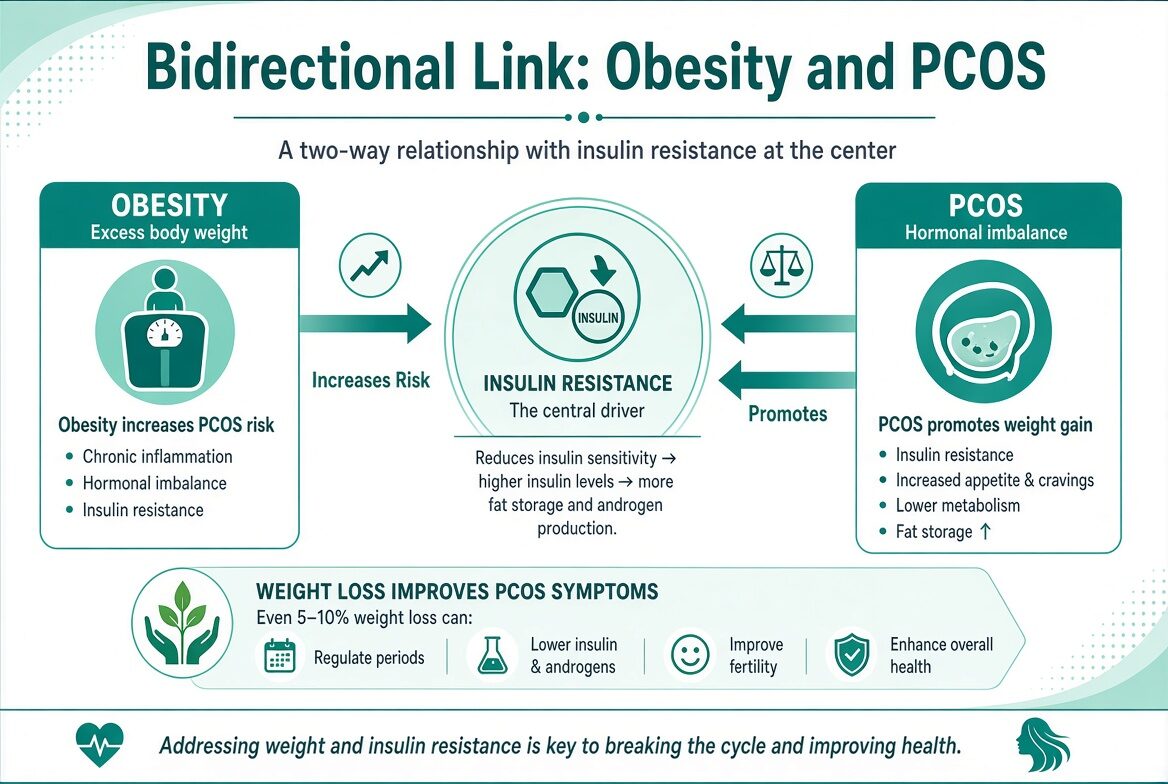
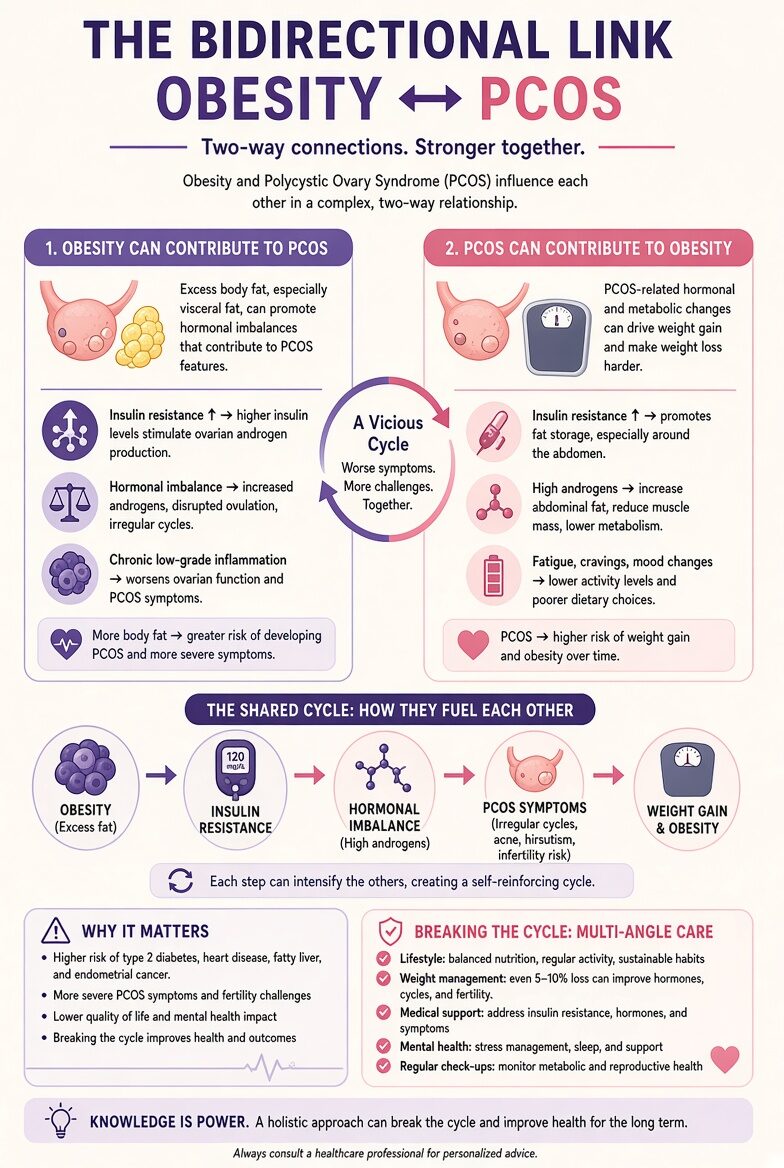
Obesity and PCOS reinforce each other. Epidemiological data and Mendelian randomization studies support a causal contribution of higher adiposity to PCOS risk; each unit increase in BMI is associated with a measurable rise in odds of the syndrome. Conversely, women with PCOS tend to gain weight more readily, develop greater central adiposity, and experience higher rates of insulin resistance than weight-matched controls. Insulin resistance is present in the majority of women with PCOS (often 50–70 percent or higher in obese subgroups) and amplifies hyperandrogenism and ovulatory dysfunction. The result is a self-reinforcing loop: excess weight worsens insulin resistance and androgen excess, which in turn favor further weight gain and more severe reproductive and metabolic features.
Metabolic consequences and clinical implications
Women with PCOS face substantially elevated lifetime risks of impaired glucose tolerance and type 2 diabetes. Meta-analyses indicate that the diabetes risk is particularly pronounced among those who are overweight or obese; lean women with PCOS show a smaller or less consistent excess risk once body weight is taken into account. Dyslipidemia, hypertension, and metabolic syndrome are also more common. Modest weight loss (on the order of 5–10 percent of body weight) is associated with improvements in menstrual regularity, androgen levels, insulin sensitivity, and fertility potential in many women. Lifestyle intervention therefore remains a first-line recommendation in international guidelines, even though sustained weight loss is difficult for many patients. Pharmacologic options that address insulin resistance (such as metformin) or promote weight loss are used adjunctively in appropriate cases.
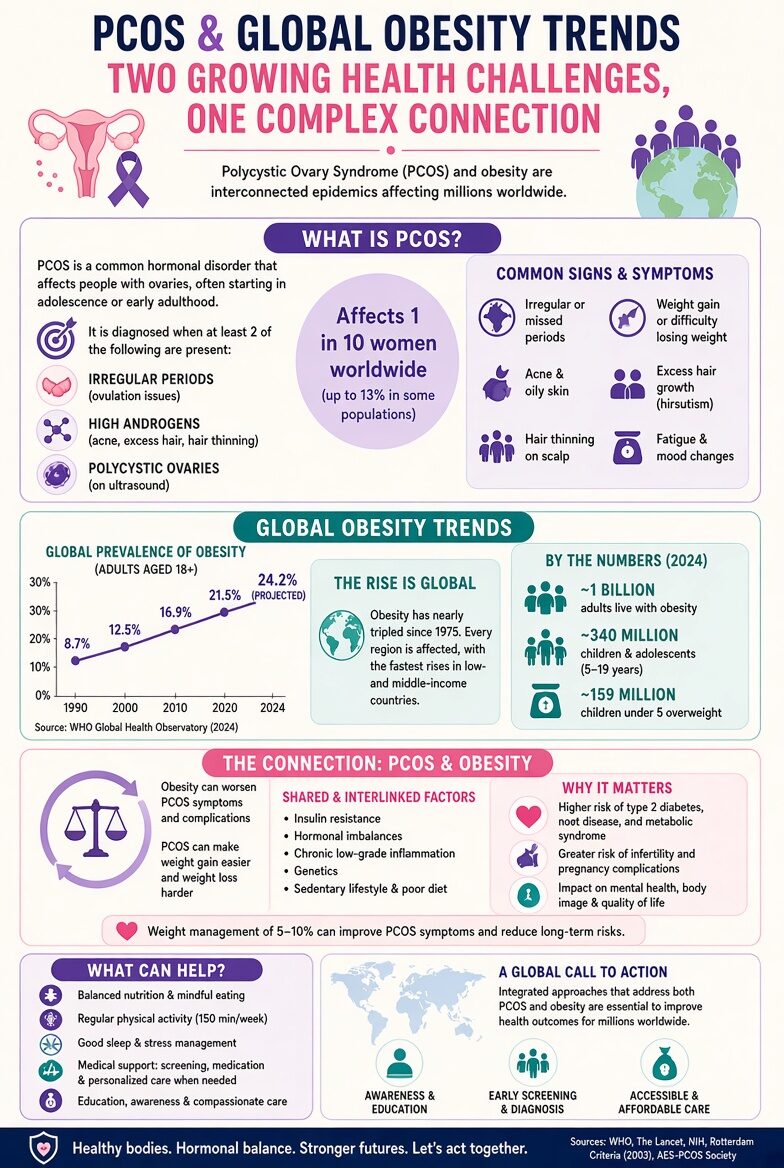
The rising global prevalence of both obesity and PCOS has clear public-health implications. As more countries complete the nutritional transition and childhood overweight increases, the absolute number of women affected by the metabolic phenotype of PCOS is expected to continue growing. Earlier recognition of at-risk adolescents, structured lifestyle support, and screening for glucose intolerance are practical measures that can reduce long-term complications. At the same time, the existence of lean PCOS phenotypes underscores that the syndrome is not solely an obesity-driven condition; genetic and intrinsic ovarian and adrenal factors also contribute.
PCOS prevalence and absolute case numbers have risen in parallel with global increases in overweight and obesity. The relationship is bidirectional and is mediated in large part by insulin resistance. Roughly half to two-thirds of women with PCOS are overweight or obese, and this subgroup carries the highest cardiometabolic risk. While diagnostic criteria and study quality influence prevalence estimates, the clinical reality is consistent across regions: PCOS is common, strongly linked to metabolic health, and responsive to interventions that improve body weight and insulin sensitivity. Addressing the dual epidemic of obesity and PCOS requires both individual clinical care and broader public-health efforts to improve nutrition and physical activity across the life course.
Sources
Global Burden of Disease Study analyses of PCOS prevalence, incidence, and DALYs, 1990–2021 (multiple publications in Frontiers in Reproductive Health, Reproductive Health, and related journals).
Systematic reviews and meta-analyses of PCOS prevalence by diagnostic criteria and study quality (Endocrine Society / Journal of Clinical Endocrinology & Metabolism and related).
Mendelian randomization and epidemiological studies on the bidirectional BMI–PCOS relationship.
Meta-analyses of type 2 diabetes risk in PCOS stratified by obesity status.
International PCOS guidelines and reviews on insulin resistance, weight management, and metabolic screening.
Research briefings by the gynecology.hospital editorial team summarise published studies and official data, and list their sources at the end of each article.