Most Used Contraceptive Methods by Region Worldwide
Global contraceptive use exceeds 870 million women. Female sterilization is the leading method worldwide, followed by condoms, IUDs and the pill. Regional patterns vary sharply: sterilization dominates Central/Southern Asia and Latin America, IUDs lead in East Asia, pills and condoms lead in Europe/North America, and injectables (with rising implants) lead in sub-Saharan Africa.

GLOBAL NEWS · RESEARCH BRIEFING
Most Common Contraceptive Methods by Region: What the Data Show and Why the Mix Differs
Global patterns in method choice, regional dominance of sterilization, IUDs, pills, injectables and implants, and the factors that shape access
For publication on gynecology.hospital Editorial Team · 14 October 2026 · Category: Global News / Contraception |
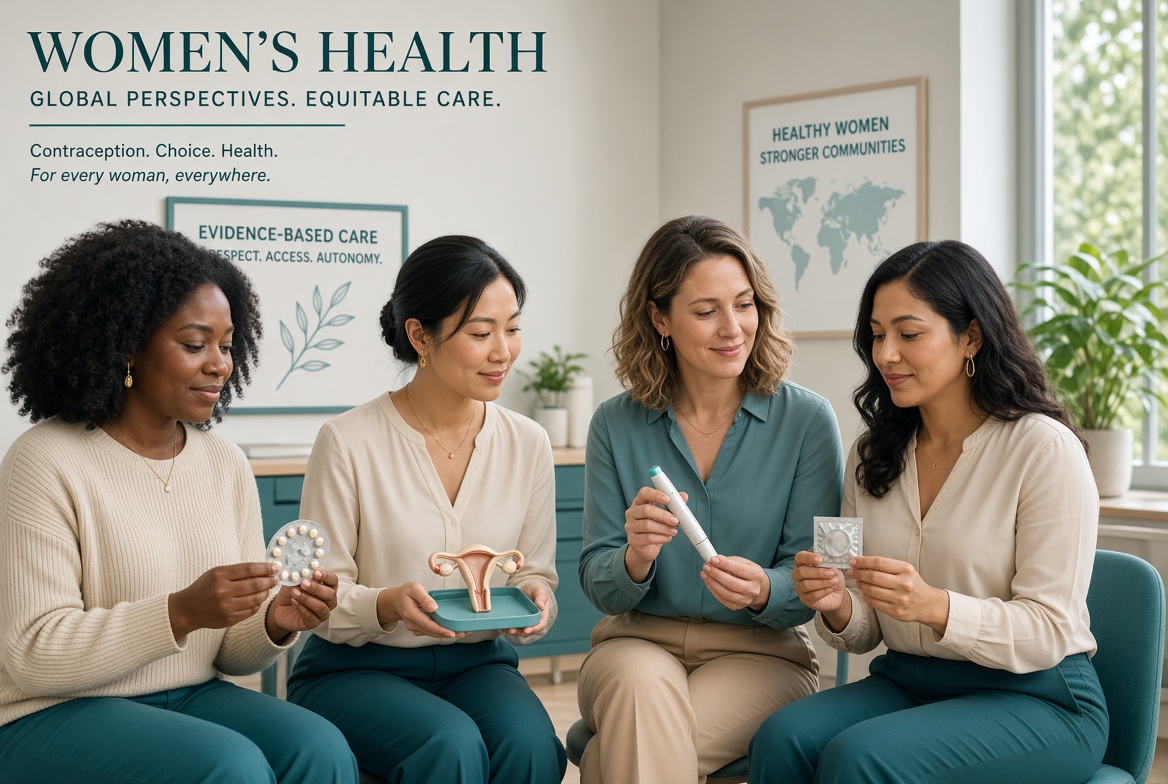
More than 870 million women worldwide use a modern contraceptive method. Yet the method that is most common in one region is often rare in another. Female sterilization dominates in large parts of Asia and Latin America; the IUD is widespread in East Asia and parts of Central Asia; the pill and condoms lead in Europe and North America; injectables remain the leading modern method across much of sub-Saharan Africa; and implants have expanded rapidly in several African and South-East Asian countries. These patterns are shaped by health-system capacity, historical program priorities, cost, cultural preferences, and the availability of trained providers.
Global method mix
According to United Nations compilations (World Contraceptive Use and World Family Planning reports), female sterilization accounts for roughly 23–24 percent of all contraceptive users globally, followed by the male condom (around 21–22 percent), the IUD (about 17 percent), and the pill (about 16 percent). Injectables and implants together make up roughly 10 percent, while traditional methods (withdrawal, rhythm) account for under 10 percent of users. Permanent or long-acting methods (sterilization, IUD, implant) represent close to half of all use worldwide. Short-acting methods dominate among younger and unmarried women; long-acting and permanent methods are more common among older women who have completed their families.
Regional patterns
United Nations regional aggregates (based primarily on survey data compiled through 2019–2022) show clear differences:
Eastern and South-Eastern Asia: The IUD is the leading method (approximately 18–19 percent of women of reproductive age), closely followed by the male condom. China’s long-standing IUD programs and high prevalence of long-acting methods drive the regional figure.
Central and Southern Asia: Female sterilization is the dominant method (around 22 percent), reflecting large-scale government programs in India and neighboring countries.
Latin America and the Caribbean: Female sterilization and the pill are the two leading methods (roughly 16 percent and 15 percent). Sterilization prevalence is especially high in several Caribbean and Central American countries.
Europe and Northern America: The pill and male condom lead (approximately 18 percent and 15 percent). Long-acting reversible methods (IUD, implant) have grown in recent years but remain secondary to short-acting options in most of the region.
Northern Africa and Western Asia: The pill and IUD are the most common (around 10–11 percent and 9–10 percent). Method mix is more balanced than in other regions, with lower overall modern-method prevalence in several countries.
Sub-Saharan Africa: Injectables are the leading modern method (around 10 percent of women of reproductive age). Implants have risen sharply in the past decade and are now the most common method in a growing number of countries. Overall modern-method prevalence remains lower than in other regions, and unmet need is higher.
Oceania (excluding Australia and New Zealand): Method mix is more variable; the pill is prominent in some island states, while traditional methods and lower overall use persist in others.
What drives the differences
Several factors explain why one method becomes dominant in a given region:
Health-system infrastructure and provider training: Sterilization and IUD insertion require surgical or procedural capacity that is concentrated in higher-resource settings or in countries that invested heavily in those methods decades ago.
Program history and supply chains: National family-planning programs that prioritized one method (for example, China’s IUD campaigns or India’s sterilization camps) leave a lasting imprint on the method mix.
Cost and procurement: Injectables and implants have become more widely available in low-income settings through donor-supported supply chains, which helps explain their growth in sub-Saharan Africa.
Cultural and personal preferences: In some societies permanent methods are preferred once childbearing is complete; in others, women favor methods that can be discontinued without a clinical visit.
Age and marital status: Younger and unmarried users rely more on condoms and the pill; older married users are more likely to use sterilization or IUDs.
Recent shifts and remaining gaps
Implants have expanded fastest in sub-Saharan Africa and parts of South-East Asia, often becoming the second or even the leading method in individual countries. Long-acting reversible contraception (LARC) has also grown in high-income countries as IUDs and implants become more acceptable and easier to access. At the same time, unmet need for modern contraception remains highest in sub-Saharan Africa and parts of Oceania. Supply disruptions, stock-outs, and limited choice continue to restrict options in many settings. The United Nations and FP2030 track progress toward the Sustainable Development Goal indicator of demand satisfied by modern methods; Eastern and South-Eastern Asia, Europe, and Latin America currently show the highest rates, while sub-Saharan Africa lags.
Method mix is not simply a matter of preference. It reflects decades of policy choices, the skills of the health workforce, and the reliability of supply chains. Expanding access to a full range of methods—rather than reinforcing a single dominant option—remains the practical goal for programs that aim to reduce unintended pregnancy and support reproductive autonomy.
Sources
United Nations Population Division, World Contraceptive Use (2019 and 2024 revisions) and World Family Planning 2022: Meeting the changing needs for family planning.
UN DESA Population Division regional aggregates on contraceptive prevalence by method (Eastern and South-Eastern Asia, Central and Southern Asia, Latin America and the Caribbean, Europe and Northern America, Northern Africa and Western Asia, sub-Saharan Africa).
FP2030 and Track20 reporting on method-mix trends, particularly the rise of implants in sub-Saharan Africa.
Guttmacher Institute and UNFPA summaries on modern contraceptive prevalence and unmet need by region.
Research briefings by the gynecology.hospital editorial team summarise published studies and official data, and list their sources at the end of each article.