How the Ukraine War Changed Women’s Health
Since 2022 Ukraine has kept most births in hospital while maternity wards were hit; maternal deaths rose from 18.9 to 25.9 per 100,000. Births fell from 273,772 (2021) to 168,778 (2025). In Russia the buildings stand, fertility is about 1.36, and abortion plus small maternity units were squeezed.
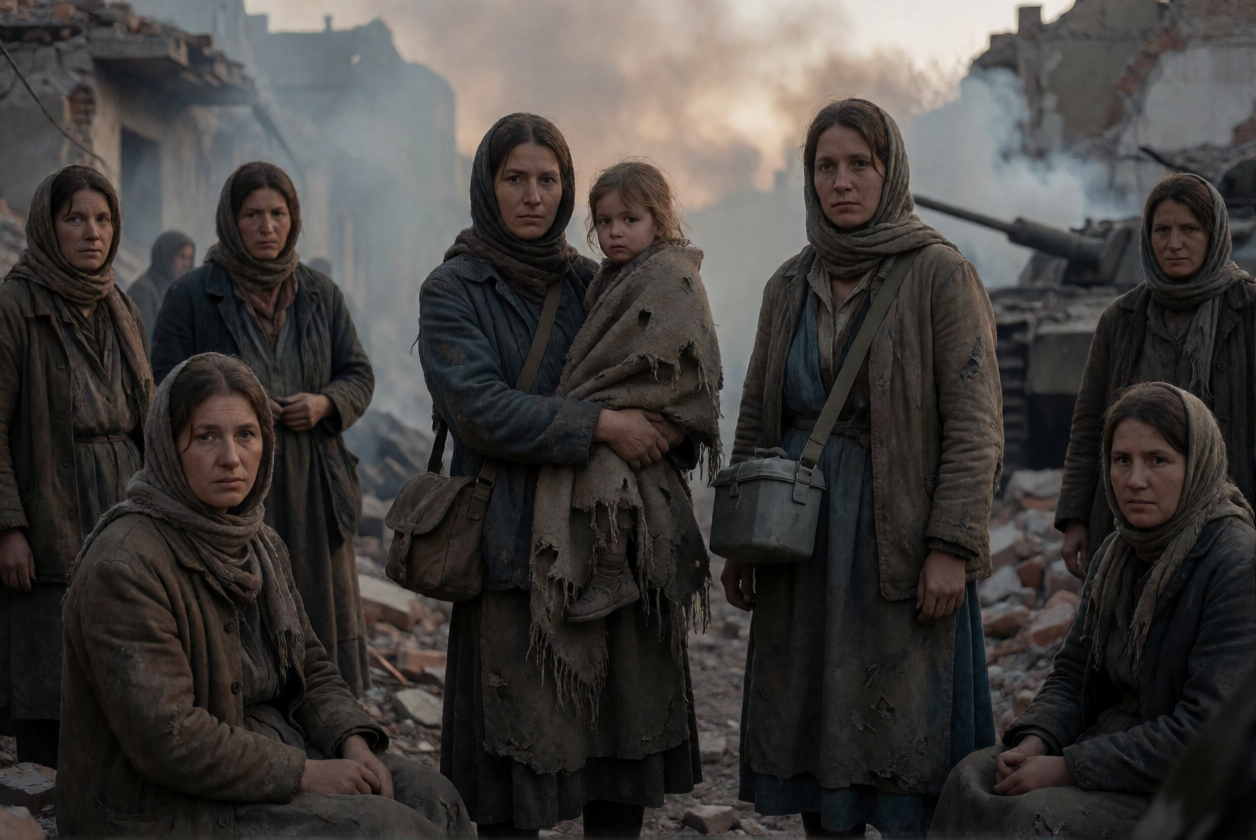
How the Ukraine War Changed Women’s Health — on Both Sides of the Front
Access to maternity care, rising complications, and birth counts in Ukraine and Russia since February 2022
The war that began with Russia’s full-scale invasion on 24 February 2022 did not invent Ukraine’s low fertility, and it did not invent Russia’s. Both countries had been below replacement for a generation. What the war did was split women’s health into two different shortages. In Ukraine the shortage is physical: maternity wards hit by missiles, ambulances that cannot move, women who delay antenatal visits because the road is mined or the power is out. In Russia the shortage is political and fiscal: obstetric units closed because they no longer “pay,” abortion squeezed in the name of demography, emergency contraception thinned by sanctions — while the state asks women for three children by 35.
The numbers below use government registrations and UN agency analyses available through mid-2026. Ukraine’s birth counts cover government-controlled territory and miss much of the occupied east and south. Russia’s official fertility series is more complete but sits next to a propaganda target it is not meeting. Both caveats belong in the first paragraph, not a footnote.
Ukraine: the service is still there. Getting to it is the problem
Most Ukrainian women who give birth still do so in a hospital. Health ministry figures cited in 2026 reporting show only 174 live births outside a facility in 2024 — about 0.10 percent of 178,091 recorded deliveries, close to the pre-escalation share. That statistic is easy to misuse. It describes the women who reached a ward, not the women who postponed care, fled the country, or delivered in occupied territory that no longer reports to Kyiv.
Access is the wound. WHO had verified 2,881 attacks on Ukrainian health care by February 2026, a jump of nearly 20 percent in 2025 alone. UNFPA’s country page, updated 24 September 2026, puts the running total above 3,200. More than 80 of those strikes hit maternity or neonatal units. In 2026 UNFPA-supported maternity hospitals were hit in Ivano-Frankivsk, Kharkiv, Odesa and Sloviansk; a March strike on Odesa Maternity Hospital No. 5 found 32 patients, 22 newborns and 27 staff on site. They reached the basement. Not every shift is that lucky.
Frontline geography decides the quality of a pregnancy. Kherson sits across the Dnipro from Russian-held ground. UNFPA puts preterm birth there at 11.8 percent, almost twice the national figure recorded in 2023, and the highest stillbirth rate in the country. The caesarean rate is 46 percent in Kherson and about 32 percent in Odesa, Zaporizhzhia and Kharkiv, against a national average above 28 percent — already double the WHO 10–15 percent range. Doctors describe the section rate as a marker of strain: scheduled surgery when a night labour under shelling is too dangerous, or a last-minute operation after delayed presentation.
UNFPA’s December 2025 reading of national data is the figure that should sit on a labour-ward whiteboard. Maternal mortality rose from 18.9 deaths per 100,000 live births in 2023 to 25.9 in 2024, a 37 percent increase in a single year, while the number of births kept falling. In the same interval uterine rupture rose 44 percent, hypertensive disorders of pregnancy more than 12 percent, severe postpartum haemorrhage nearly 9 percent. Fewer pregnancies, more of them complicated. That is a system running hot, not a sudden change in Ukrainian women’s bodies.
Everyday barriers stack under the missiles:
Transport. In eastern rural surveys, 84 percent of respondents said arranging safe travel to care had become harder since February 2022; transport was the main obstacle for about three in four.
Medicines. A WHO Health Tracker round in late 2025 found that among people who needed medicines, 89 percent had trouble obtaining them.
Primary care. Seventy-four percent of respondents in more vulnerable regions reported problems reaching PHC, against 62 percent elsewhere.
Workforce. The health labour force has contracted by about 14 percent. Midwives and obstetricians leave the front or the country.
Gender-based violence. UNFPA estimates 2.9 million people in need of GBV response in 2026. UN Women has cited a 36 percent rise in violence against women since 2022.
Occupied and former frontline towns. Maternity buildings in parts of Luhansk and Donetsk were converted to military hospitals. Births there drop out of Ukrainian statistics and often out of a Ukrainian birth certificate unless the family later goes to court or uses the justice ministry’s wartime registration channel.
The adaptation is underground. UNFPA and UNOPS have built bunkerised maternity units in Kharkiv, Kherson and Sumy. Kherson’s underground ward logged 118 births in 2024 and 110 in the first part of 2025. Two-thirds of babies in Ukraine are now born in UNFPA-supported facilities. That is not a development success story. It is what continuity looks like when the first floor is a target.
Ukraine’s births: already falling, then the cliff
Before the full-scale war Ukraine was already on a long descent. Registered live births: 273,772 in 2021; 206,032 in 2022, a 25 percent drop in the first invasion year; 187,387 in 2023; 176,679 in 2024; 168,778 in 2025 (Ministry of Justice figures compiled by Opendatabot). Against 2021 that is 38 percent fewer newborns. Deaths in 2025 were still about 485,000. Three deaths for every live birth.
Total fertility is the number people argue about because the denominator — women of childbearing age still inside the country — is moving. World Bank / UN series put Ukraine near 1.15 in 2021, under 0.90 in 2022, and around 0.98–0.99 in 2023–2024. A UNICEF-backed MICS survey in 2025–26, covering government-controlled households and excluding most frontline communities, came in at 1.1. Demographers at the Ptoukha Institute called 1.1 less catastrophic than the 0.8–0.9 guesses that had circulated, and comparable to Ukraine in 2001. It is still among the lowest rates measured anywhere, and it is still far below replacement 2.1.
Two corrections matter. First, millions of women of reproductive age left for the EU in 2022–23; some of their births happen in Poland or Germany and do not appear in Kyiv’s ledger. Second, occupied oblasts stopped reporting. A collapse in registered births is therefore a mix of fewer conceptions, missing mothers, and missing territory. The clinical picture is consistent anyway: women who remain describe postponement. First births as a share of all births fell from 42.6 percent in 2020 to 38.8 percent in 2024. People who can wait, wait.
Russia: the ward is open, the choice is narrower
Russia did not have its maternity hospitals shelled. It had a different problem, which the war made cheaper to ignore. Births had been falling since the 2015 peak of the maternity-capital boom. Rosstat’s total fertility rate sat near 1.47–1.51 in 2021, about 1.42 in 2022, 1.41 in 2023, 1.40 in 2024 and around 1.36–1.37 in 2025 — the weakest reading since 2006, before the big pronatalist push. Live births were about 1.22 million in 2024 and, on independent tallies used by Russian demographers, close to 1.18 million in 2025, under the 1999 post-Soviet low. Chechnya and Tuva remain above replacement; Leningrad Oblast has been measured under 1.0. The national target of 1.6 by 2030 is not in the data.
Access to ordinary gynaecology is uneven for reasons that predate the tanks and then rode the budget. The Health Ministry has closed small maternity units that handle fewer than 100 births a year. Duma family-committee figures cited in 2025 said more than 150 state facilities had stopped offering maternity care over five years. Remote towns now send complicated pregnancies to a regional centre at the family’s expense. Obstetrician-gynaecologist posts were already vacant by the thousands before 2022; war wages pull men into the army and money out of civilian clinics.
Reproductive choice tightened as official anxiety about the birth curve grew:
Private abortion. The Moscow Patriarchate’s family commission said that between February 2023 and January 2026, 852 private clinics — 30 percent of the private sector — stopped offering abortion. Human Rights Watch found seven Russian regions plus occupied Crimea with no licensed private provider left.
Medical abortion drugs. The health minister said in July 2025 that the pills were no longer for sale in pharmacies. State hospitals perform a smaller share of medical abortions than private clinics did.
“Inducement” laws. By late 2025, two dozen regions plus St Petersburg had rules that treat advice to terminate as an offence, including from relatives or clinicians.
Emergency contraception. Sanctions and supply gaps made the morning-after pill scarce even where it is technically over the counter.
Occupied Crimea. Private abortion licences disappeared. In 2024 only 23 percent of on-request abortions in state facilities there were medical.
None of this is a classical wartime collapse of operating theatres. A woman in Moscow can still find an antenatal appointment. A woman in Karelia or Mordovia may have to travel oblasts to end a pregnancy. A teenager in a region that pays schoolgirl mothers is steered toward delivery. The war’s effect on Russian women’s health is less rubble than a state that decided fertility was a security input and started closing the exits.
Two birth winters, one war
Put the ledgers side by side without pretending they are the same country.
Ukraine, government-controlled registrations: 273,772 live births in 2021, 168,778 in 2025. That is the invasion year plus three more years of decline on top of a pre-war slide. Fertility around 1.0–1.1. Maternal death rate up 37 percent in a single documented year. Prematurity and caesarean sections concentrated on the line of contact. The service exists — often one floor down — and the patient often arrives late.
Russia, national registrations: fertility from about 1.5 before the invasion to about 1.36 in 2025; births at a two-decade low. Maternal hospitals are being rationalised rather than bombed. Abortion and contraception are the valves the state is tightening. The mobilisation of men, inflation, and the sense that the next years are not safe for a second child do the rest. Pronatalist cash did not survive contact with a long war.
Occupied Ukrainian territory sits in the crack between the two datasets. Births there are registered under Russian or proxy rules, or not in a form Kyiv will accept without a later court file. Maternity buildings have been used as military hospitals. Those women are missing from both “success” narratives.
What a clinic outside the war should do with this
A displaced Ukrainian patient may have a thin antenatal record, a late booking, and a trauma history. Assume missed screening, not non-compliance.
Frontline and recently displaced women carry higher preterm and hypertensive risk than the Ukrainian national average. Treat the geography as a clinical factor.
A Russian or occupied-Crimea patient seeking abortion or emergency contraception may have already been turned away at home. That is a service gap, not a preference.
Do not use crude birth totals as a simple “war destroyed fertility” headline. Ukraine’s 2022 drop mixes exile, occupation and fear. Russia’s drop is a pre-existing curve the war steepened.
The usable sentence is narrower than the politics. On the Ukrainian side, women’s health services exist under fire and still catch almost every recorded birth — at the price of more ruptures, more sections, more maternal deaths per live birth. On the Russian side, the buildings stand and the policy is to make not having a child harder. Both populations were already having too few children to replace themselves. The war did not start that. It made one country’s labour ward a target and the other country’s reproductive clinic an instrument.
Sources
UNFPA Ukraine country page (updated 24 September 2026); UNFPA analysis of maternal mortality 2023–2024 (18.9 to 25.9 per 100,000); UNFPA/UN News reporting on Kherson, Sumy, Odesa and Sloviansk maternity strikes, 2025–2026.
WHO Europe and WHO Ukraine: verified attacks on health care (2,763 by December 2025; 2,881 by February 2026, +20 percent in 2025); Kherson maternity ward strike, 4 December 2025.
The Lancet Obstetrics, Gynaecology & Women’s Health (2026) on maternal facilities under attack; The Lancet Regional Health – Europe ecological study of Ukrainian maternal and perinatal outcomes, 2019–2024.
Ukrainian Ministry of Justice birth and death registrations via Opendatabot (2021: 273,772 births; 2025: 168,778 births; 2025 deaths: 485,296). MICS Ukraine 2025–26 fertility estimate of 1.1 (Kyiv Post / Ptoukha Institute briefing, June 2026). World Bank TFR series for Ukraine.
Rosstat TFR and birth totals as reported 2024–2026 (TFR about 1.40 in 2024, about 1.36–1.37 in 2025; ~1.22 million births in 2024). Analyses by Alexey Raksha and HSE work on the 2007–2025 pronatalist cycle.
Human Rights Watch, February 2026, on Russian abortion restrictions; Meduza and The Insider reporting on clinic closures, “inducement” laws, maternity-ward shutdowns and occupied Crimea.
UN Women explainer on women in conflict (2026); WHO Health Tracker and ReliefWeb humanitarian bulletins on medicines and PHC access in Ukraine, 2025–2026.
Research briefings by the gynecology.hospital editorial team summarise published studies and official data, and list their sources at the end of each article.