Extreme Heat and Women’s Reproductive Health Risks
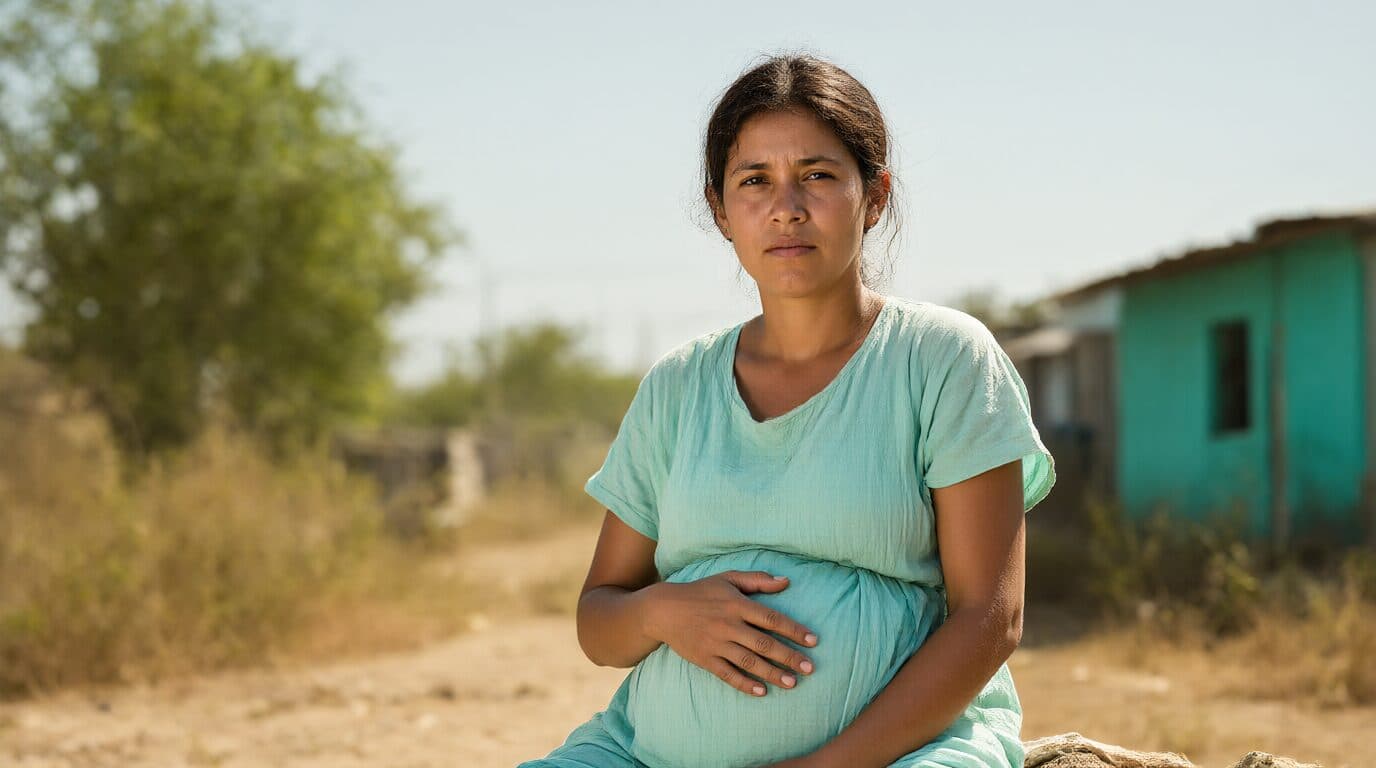
Extreme heat is linked to higher odds of preterm birth (26% during heatwaves), stillbirth, and other complications. Risks are higher in low-income countries. Climate change has roughly doubled pregnancy heat-risk days in most countries, with the largest increases in the Caribbean, Latin America, Southeast Asia, and sub-Saharan Africa.
GLOBAL NEWS · RESEARCH BRIEFING
Extreme Heat, Climate Change, and Women’s Reproductive Health: Effects on Menstrual Cycles, Pregnancy Outcomes, and Fertility in Developing Countries
What large meta-analyses and climate attribution studies show about rising heat exposure and its disproportionate burden on maternal and reproductive health in low-resource settings
For publication on gynecology.hospital Editorial Team · 21 October 2026 · Category: Global News / Climate and Health |
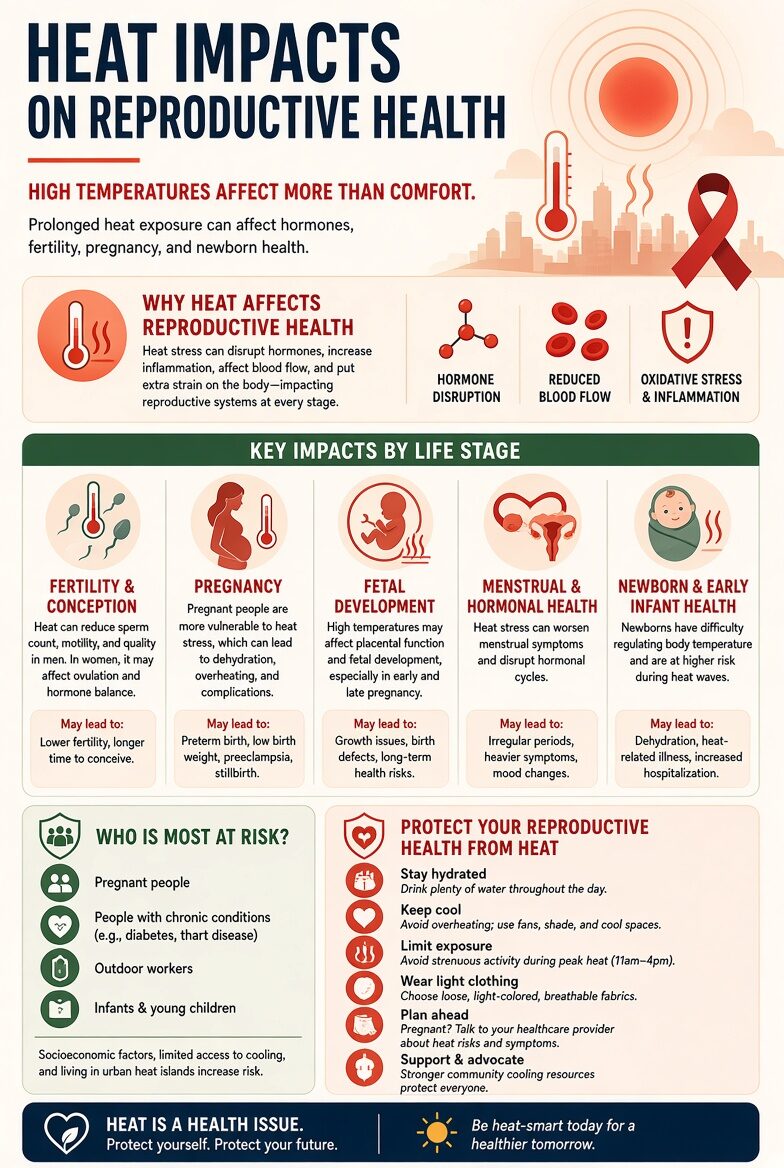
Rising ambient temperatures and more frequent heatwaves are emerging as measurable risks to women’s reproductive health. A 2024 systematic review and meta-analysis published in Nature Medicine synthesized 198 studies from 66 countries and found consistent associations between higher heat exposure and adverse maternal, fetal, and neonatal outcomes. Odds of preterm birth rose by approximately 4 percent per 1 °C increase in heat exposure and by 26 percent during heatwaves. Elevated risks were also observed for stillbirth, congenital anomalies, gestational diabetes, and overall obstetric complications. These effects are not evenly distributed. Climate Central’s analysis of 2020–2024 data showed that climate change at least doubled the average annual number of pregnancy heat-risk days in most countries, with the largest increases concentrated in the Caribbean, Central and South America, Southeast Asia, and sub-Saharan Africa—regions where healthcare capacity is often limited.
Pregnancy and birth outcomes
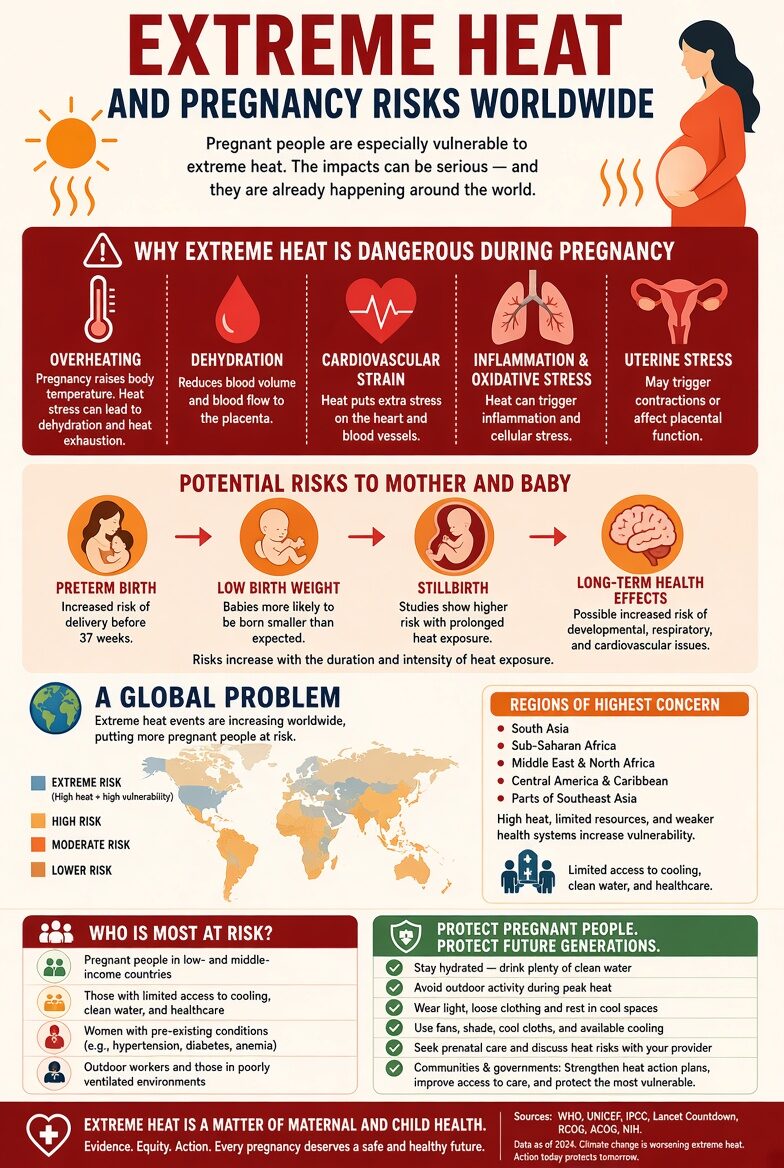
The strongest evidence concerns pregnancy. Heatwaves are associated with higher odds of preterm birth, and the association appears stronger in low-income countries than in high-income settings. Stillbirth risk also increases with high heat exposure. Gestational diabetes and hypertensive disorders of pregnancy show elevated odds in several studies, though the volume of evidence is smaller. Proposed mechanisms include maternal dehydration, reduced placental blood flow, systemic inflammation, and direct thermal stress on the fetus. Pregnant women have a reduced capacity to dissipate heat because of increased metabolic rate and cardiovascular demands, making them physiologically more vulnerable. In low-resource settings these biological risks are compounded by limited access to cooling, hydration, antenatal care, and emergency obstetric services.
Menstrual cycle, hormones, and fertility
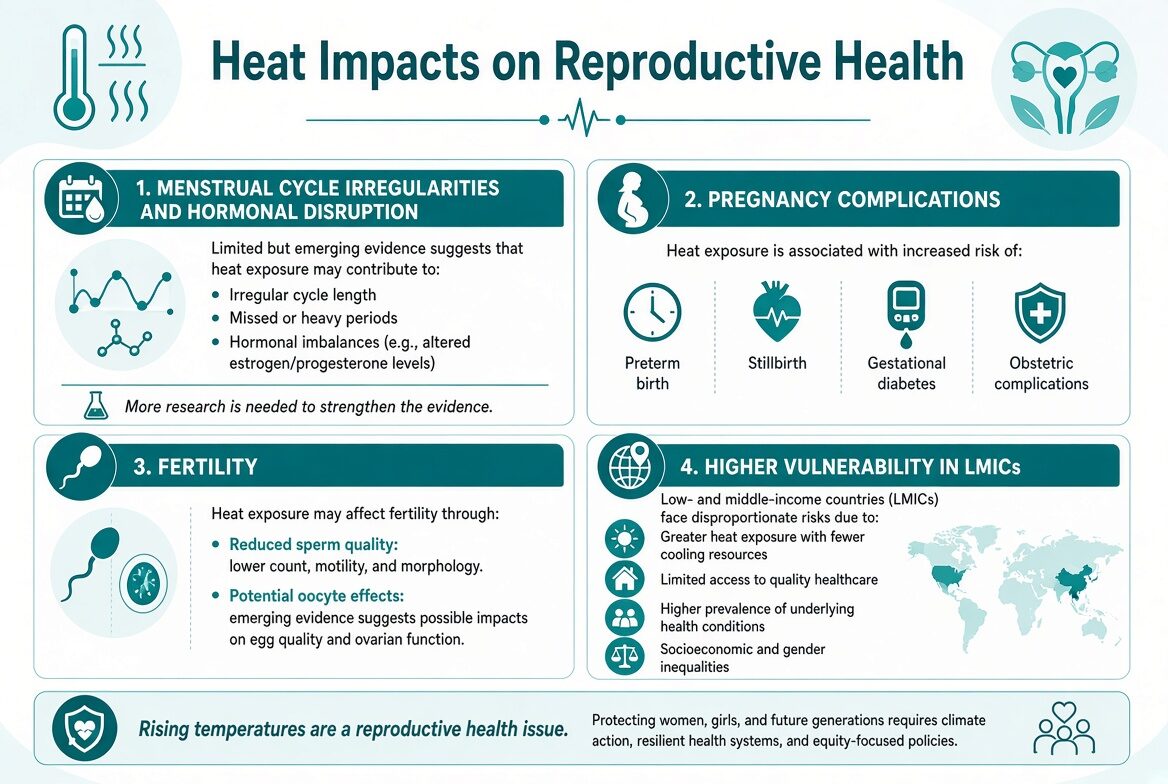
Direct evidence linking ambient heat to menstrual-cycle disruption remains more limited than the pregnancy literature, but emerging observations and physiological reasoning point to plausible pathways. Extreme heat can contribute to hormonal imbalance, irregular cycles, and intensification of conditions such as polycystic ovary syndrome or endometriosis symptoms. Heat stress is better documented in male fertility: prolonged elevated scrotal temperature reduces sperm count, motility, and morphology. Female oocyte quality and ovarian function may also be affected through oxidative stress and disruption of the follicular environment, although human data are still sparse. Population-level studies in low- and middle-income countries have linked temperature anomalies to changes in reproductive desire, underweight, and temporary migration, suggesting broader effects on reproductive autonomy and nutritional status.
Why developing countries face greater risks
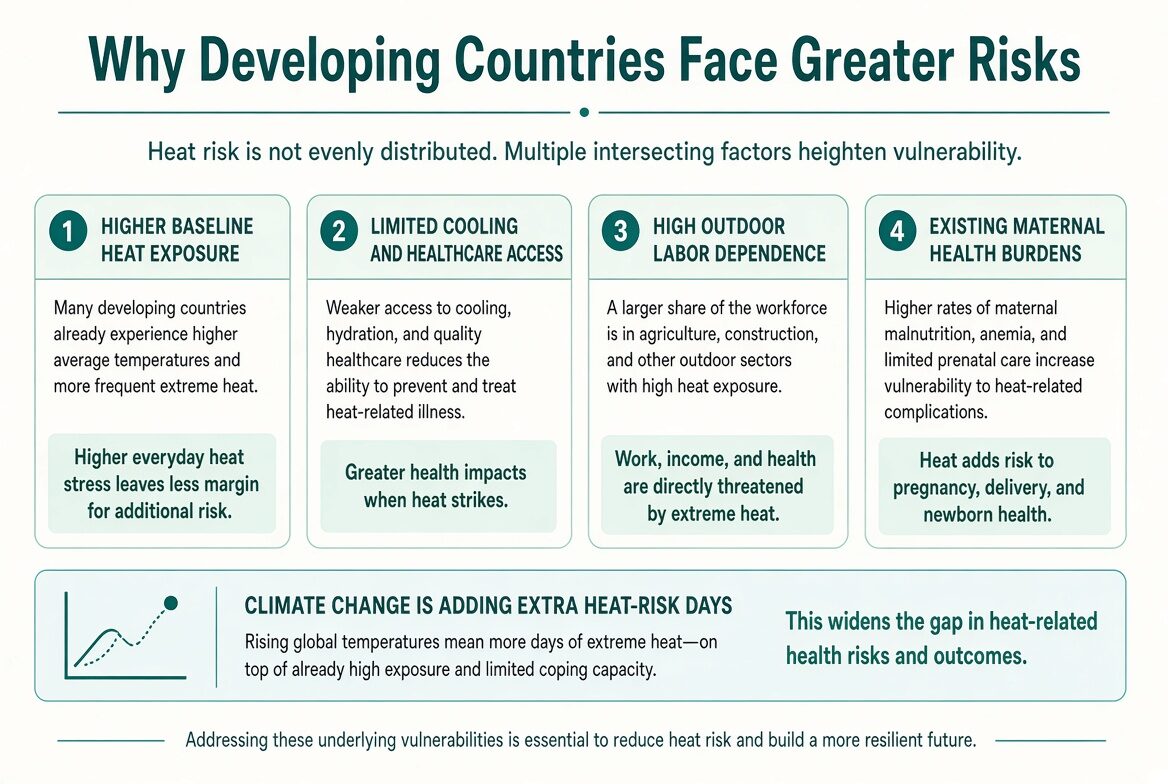
Several structural factors amplify heat-related reproductive risks in low- and middle-income countries. Baseline temperatures are already high in many tropical regions, so additional warming produces more days above critical thresholds. A larger share of the workforce engages in outdoor agricultural or informal labor with limited ability to avoid peak heat. Access to air conditioning, reliable electricity, and clean water is uneven. Pre-existing burdens of maternal anemia, undernutrition, and limited antenatal care reduce physiological reserve. Climate attribution analyses show that the greatest recent increases in pregnancy heat-risk days have occurred precisely in these settings. Only a small fraction of the existing heat-and-pregnancy literature comes from low-income countries, leaving important gaps in local risk quantification and intervention design.
Public-health implications
Protecting reproductive health in a warming climate requires both mitigation of greenhouse-gas emissions and targeted adaptation. Practical measures include heat-health early-warning systems that specifically flag pregnancy risk days, improved access to cooling and hydration during pregnancy, flexible work arrangements for outdoor workers, and strengthened antenatal surveillance during hot seasons. Clinical guidelines should incorporate heat exposure as a modifiable risk factor for preterm birth and stillbirth. Research priorities include better data from the most affected regions, clearer thresholds for different outcomes, and evaluation of low-cost interventions. Because the largest absolute increases in heat exposure are occurring where health systems are least resourced, equity considerations must guide both research funding and adaptation investment.
Extreme heat is already associated with measurable increases in preterm birth, stillbirth, and other obstetric complications, with the strongest signals in low-income settings. Climate change has roughly doubled pregnancy heat-risk days in most countries over recent years, and the greatest absolute increases have occurred in developing regions. Effects on the menstrual cycle and female fertility are biologically plausible and supported by limited evidence, while male fertility impairment is better established. Addressing these risks requires integrating maternal and reproductive health into national climate-adaptation plans, expanding research in the most vulnerable settings, and reducing both heat exposure and underlying health inequities.
Sources
Lakhoo et al. Systematic review and meta-analysis of heat exposure impacts on maternal, fetal and neonatal health. Nature Medicine, 2024/2025.
Climate Central. Climate change increasing pregnancy risks around the world due to extreme heat (2020–2024 analysis).
PNAS study on temperature anomalies and reproductive-age women’s health in low- and middle-income countries.
Scoping and systematic reviews on ambient temperature, fertility, spontaneous abortion, and heat stress on reproductive function.
Regional reports and clinical observations from sub-Saharan Africa and other high-heat settings.
Research briefings by the gynecology.hospital editorial team summarise published studies and official data, and list their sources at the end of each article.