DOJ Criminal Investigation Reopens the Unsolved 2022 Dobbs Leak
The U.S. Justice Department has stepped up a criminal investigation into who leaked the 2022 Dobbs draft opinion, issuing grand jury subpoenas to former court personnel. The Supreme Court's own 2023 inquiry interviewed 97 employees but identified no one, and several relevant offenses expire in spring 2027.
Editorial Team | 7 November 2026
Abstract
More than four years after an unprecedented draft opinion leak shook the U.S. Supreme Court, the Department of Justice has intensified a criminal investigation into who disclosed the document that previewed the overturning of Roe v. Wade. The probe, overseen by U.S. Attorney Jeanine Pirro in Washington, has reportedly issued grand jury subpoenas and seeks information from former court personnel. The Court’s own 2023 internal inquiry interviewed nearly 100 employees yet identified no responsible party. This renewed effort raises questions about institutional confidentiality, potential criminal liability, and the lasting effects of the Dobbs decision on reproductive health access across the United States.
The May 2022 Leak and Its Immediate Aftermath
On 2 May 2022, Politico published a draft majority opinion in Dobbs v. Jackson Women’s Health Organization, authored by Justice Samuel Alito. The document indicated that a majority of the Court was prepared to overrule Roe v. Wade (1973) and Planned Parenthood v. Casey (1992), returning abortion regulation to the states. The final decision, issued on 24 June 2022, largely tracked the leaked draft and ended nearly fifty years of federal constitutional protection for abortion.
Chief Justice John Roberts ordered an internal investigation the same week, describing the disclosure as an “egregious breach of trust.” The leak triggered protests outside the homes of several justices and contributed to heightened security concerns. In June 2022, an individual was arrested near Justice Brett Kavanaugh’s residence with weapons and materials consistent with an assassination plot; the person was later convicted. Justice Alito has since stated that the leak “very predictably made the five of us in the majority targets for assassination.”
The Supreme Court’s Internal Investigation
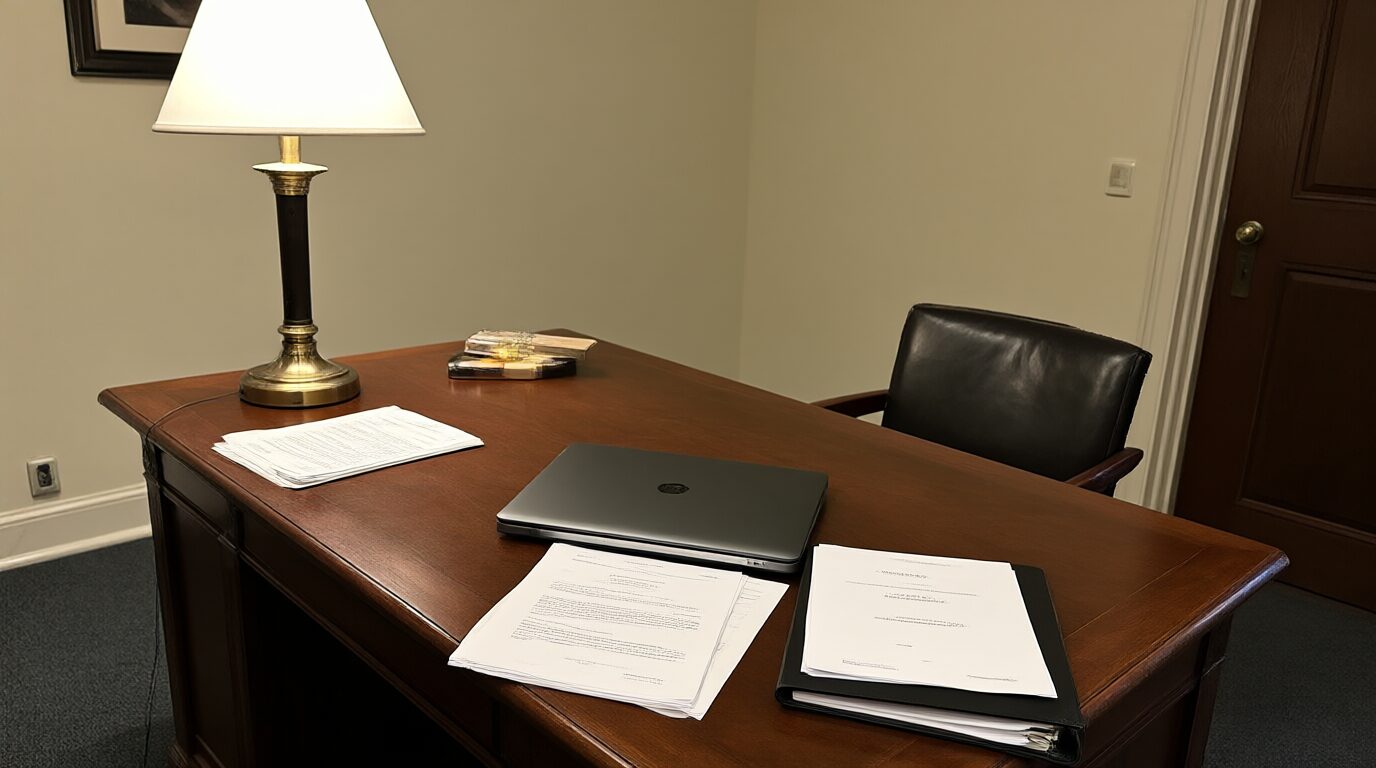
Marshal of the Supreme Court Gail Curley led the inquiry. Investigators conducted 126 formal interviews of 97 court employees and clerks, reviewed forensic data from computers, printers, and networks, and examined call and text logs. All interviewed personnel signed affidavits denying responsibility. The January 2023 report concluded that the team was “unable to identify a person responsible by a preponderance of the evidence.” Former Homeland Security Secretary Michael Chertoff reviewed the work and found it thorough. Curley later confirmed she had spoken with each of the nine justices, none of whom was implicated, and that justices were not required to sign sworn affidavits.
The investigation ruled out an external hack as unlikely and noted that pandemic-era remote work had increased opportunities for both deliberate and inadvertent disclosures. Some employees acknowledged discussing the draft or the vote count with spouses. No forensic evidence pointed to a specific individual.
The 2026 DOJ Criminal Probe
Reporting by The New York Times on 5 November 2026, corroborated by Fox News, the New York Post, and others, revealed that the Justice Department has been conducting a criminal investigation into the leak. The effort, which sources say began the previous year, has accelerated in recent weeks. U.S. Attorney for the District of Columbia Jeanine Pirro is overseeing the probe, working with career prosecutors including Carlton Davis. Prosecutors have issued grand jury subpoenas and sought testimony and records from people who worked at the Court around the time of the disclosure.
The Department of Justice has declined to comment on the existence of the investigation. It remains unclear whether new evidence has emerged or precisely which federal statutes prosecutors believe may have been violated. Potential theories include theft of government property or false statements made during the Court’s internal inquiry. Several relevant federal offenses carry five-year statutes of limitations, creating a practical deadline in the spring of 2027.
In early October 2026, Justice Alito told Fox News that he has “an opinion” about the identity of the leaker but that “the evidence available at this time is not strong enough for the court or for me to say this is the person who was responsible.” He has described the leak as “totally unprecedented in the history of the country” and a “grave breach of the trust that everybody who worked in this building had before that point.”
Legal and Institutional Questions
No federal statute specifically criminalizes the unauthorized disclosure of a Supreme Court draft opinion. Unlike classified national security information, internal Court deliberations are protected primarily by institutional norms and employment rules rather than a dedicated criminal provision. Any prosecution would therefore need to fit the facts to an existing statute, such as conversion of government property or obstruction-related offenses. Legal observers have also noted separation-of-powers considerations when the executive branch investigates the judiciary.
The Court’s internal process itself has drawn scrutiny. While nearly one hundred employees were interviewed under oath, the justices were consulted more informally. The failure to identify a source left the institution without a clear resolution, even as it implemented new confidentiality protocols.
Implications for Reproductive Health Access
The Dobbs decision returned abortion policy to the states, producing a patchwork of laws. Some states enacted near-total bans; others expanded protections. Data from public-health agencies and research groups have documented measurable changes in abortion incidence, travel for care, and use of medication abortion via telehealth or mail. Maternal health indicators, including rates of delayed care and self-managed abortion, have varied by jurisdiction.
The leak itself accelerated public debate and political mobilization months before the formal ruling. For patients and clinicians, the period between May and June 2022 created uncertainty about the legal status of scheduled procedures. Subsequent state-level restrictions have required many individuals to travel longer distances, raising documented barriers related to cost, time off work, and clinical continuity. Ongoing litigation over emergency exceptions, medication abortion, and interstate travel continues to shape the practical availability of services.
Conclusion
The Department of Justice’s criminal investigation into the 2022 Dobbs leak reopens a chapter that the Supreme Court’s own inquiry left unresolved. Whether prosecutors identify a responsible individual or secure a conviction remains uncertain, particularly given the absence of a statute tailored to Court leaks and the approaching limitations period. Regardless of the legal outcome, the episode underscores the fragility of institutional confidentiality and the enduring public-health consequences of the decision that the leaked draft previewed. For clinicians and patients navigating a fragmented regulatory landscape, the Dobbs ruling continues to define the boundaries of reproductive health care in the United States.
References
Kantor J, Schmidt MS. Justice Dept. steps up criminal inquiry of Supreme Court abortion decision leak. The New York Times. 5 November 2026.
King R. Justice Department conducting criminal probe into leak of Dobbs abortion decision. New York Post. 5 November 2026.
Supreme Court of the United States. Statement and report of the Marshal regarding the investigation into the Dobbs draft opinion leak. 19 January 2023.
Politico. Supreme Court has voted to overturn abortion rights, draft opinion shows. 2 May 2022.
Dobbs v. Jackson Women’s Health Organization, 597 U.S. 215 (2022).
Fox News reporting and related accounts confirming U.S. Attorney Jeanine Pirro’s oversight of the investigation, November 2026.
Research briefings by the gynecology.hospital editorial team summarise published studies and official data, and list their sources at the end of each article.