Doctors’ Rights and Protections Worldwide
Legal protections for doctors vary widely. A 2024 WHO/Georgetown study of 182 countries found 62% alignment with the Care Compact, strongest on occupational safety and pay, weakest on mental health. Europe has the tightest working-hour limits; violence against healthcare workers remains high globally.

GLOBAL NEWS · RESEARCH BRIEFING
Doctors’ Rights Worldwide: Legal Protections, Working Conditions, and Safety Across Countries
What the WHO/Georgetown Care Compact study, working-hour regulations, and violence data show about the rights and protections of physicians
For publication on gynecology.hospital Editorial Team · 17 October 2026 · Category: Global News / Physician Rights |
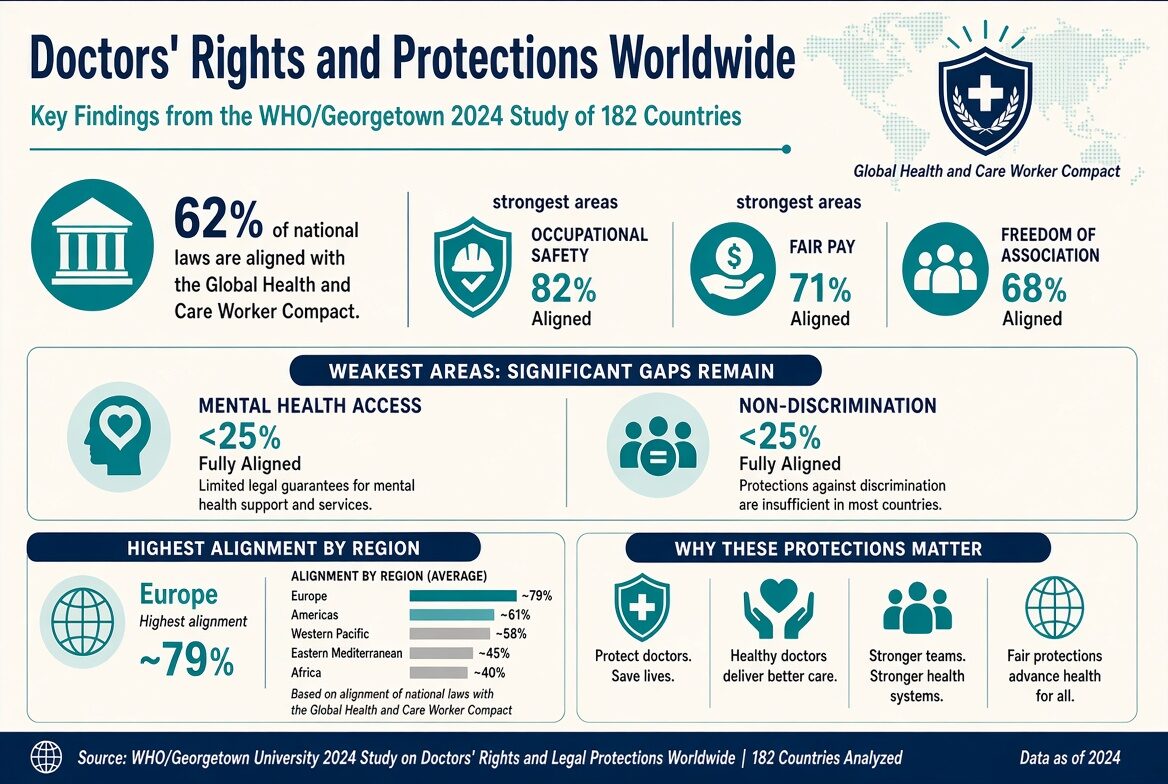
The legal and practical rights of physicians vary substantially across countries. A 2024 study by the World Health Organization and Georgetown University examined laws and policies in 182 countries against the Global Health and Care Worker Compact. It found that 62 percent of national laws were aligned with the Compact’s indicators. Alignment is strongest on occupational health and safety, fair remuneration, enabling work environments, and freedom of association. It is weakest on access to mental-health services for health workers and on equal treatment and non-discrimination, where fewer than 25 percent of countries are fully aligned. Europe shows the highest regional alignment (approximately 79 percent). Income level is only weakly associated with alignment; several lower-income countries have strong legal frameworks on paper.

Working hours and conditions
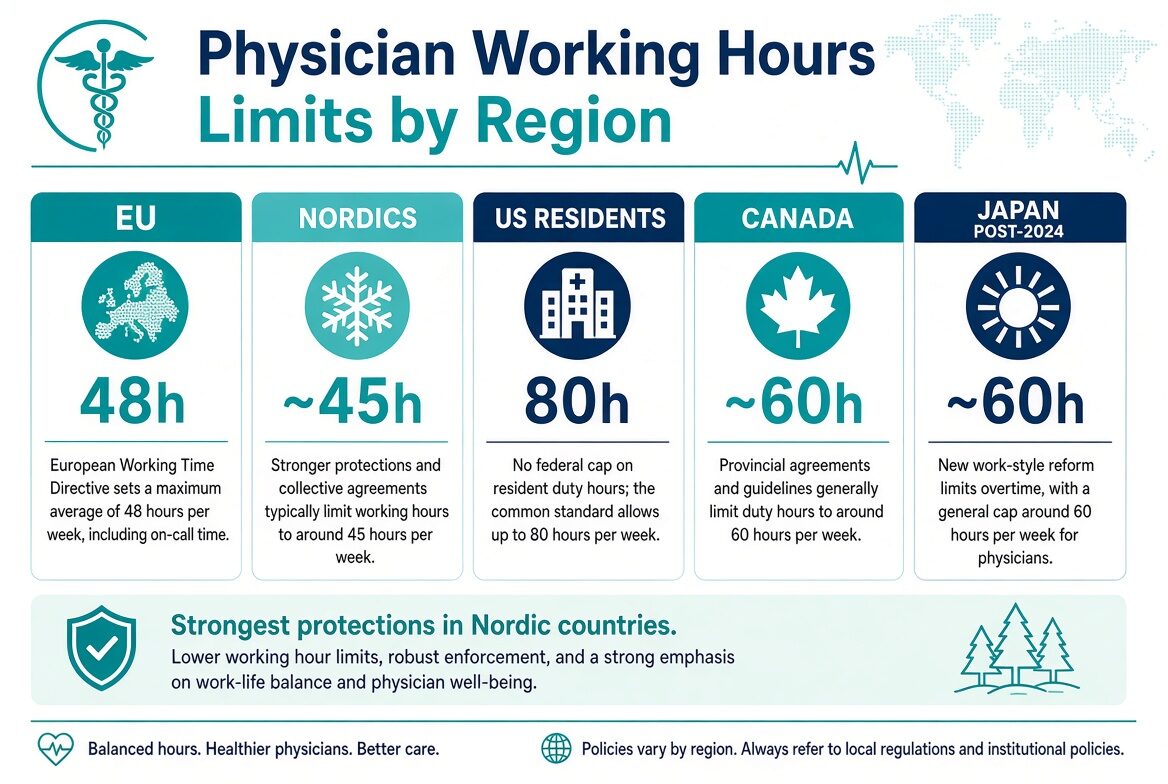
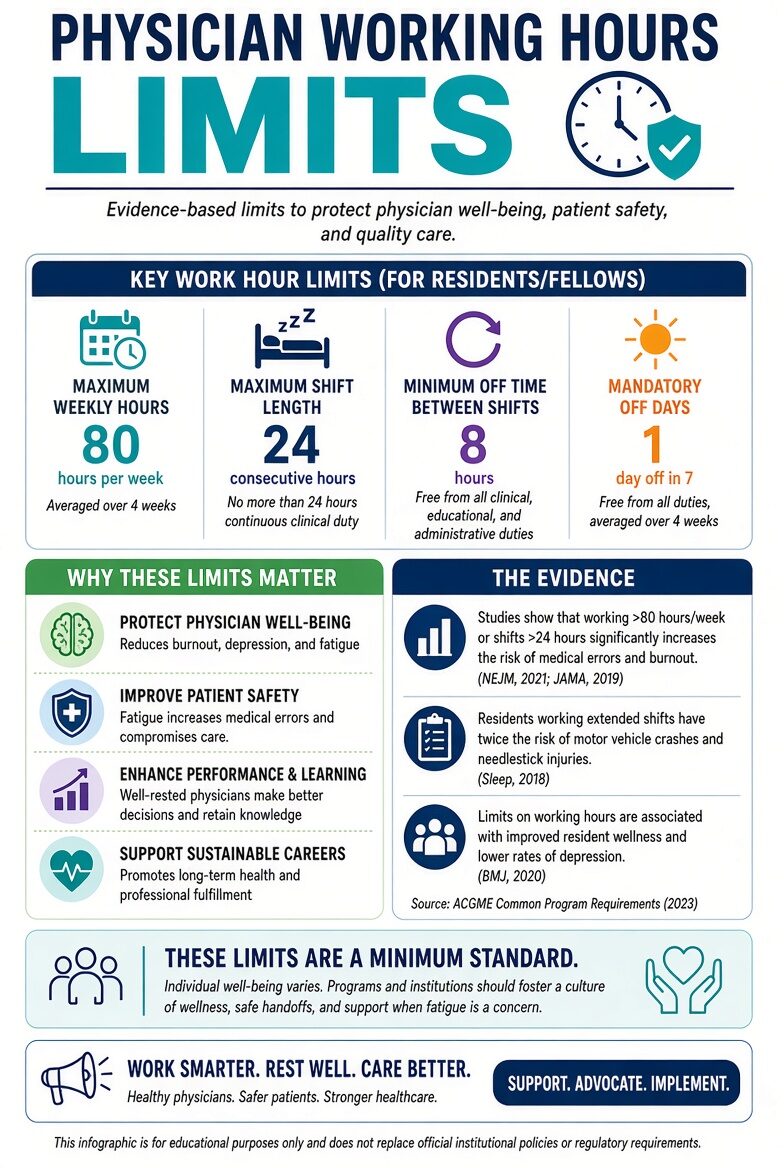
Working-hour limits differ markedly. The European Working Time Directive caps average weekly hours at 48, including on-call time, with mandatory rest periods. Nordic countries often operate closer to 40–45 hours with strong union enforcement. In the United States, resident physicians are limited to 80 hours per week under ACGME rules; attending physicians have no equivalent federal cap. Canada typically aims for around 60 hours through provincial agreements. Japan introduced a work-style reform in 2024 that generally limits overtime, targeting roughly 60-hour weeks for most physicians, though higher thresholds remain for some categories. Enforcement and actual hours worked vary; many systems report frequent breaches due to staffing shortages.
Violence and safety
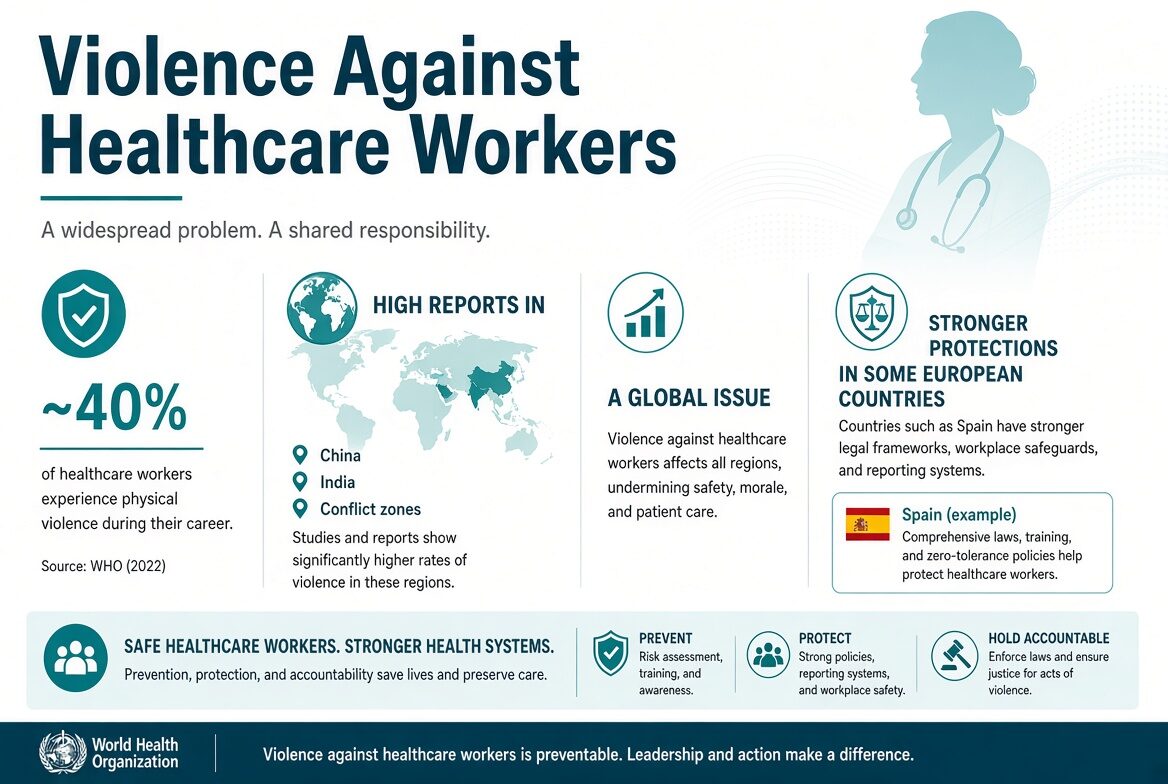
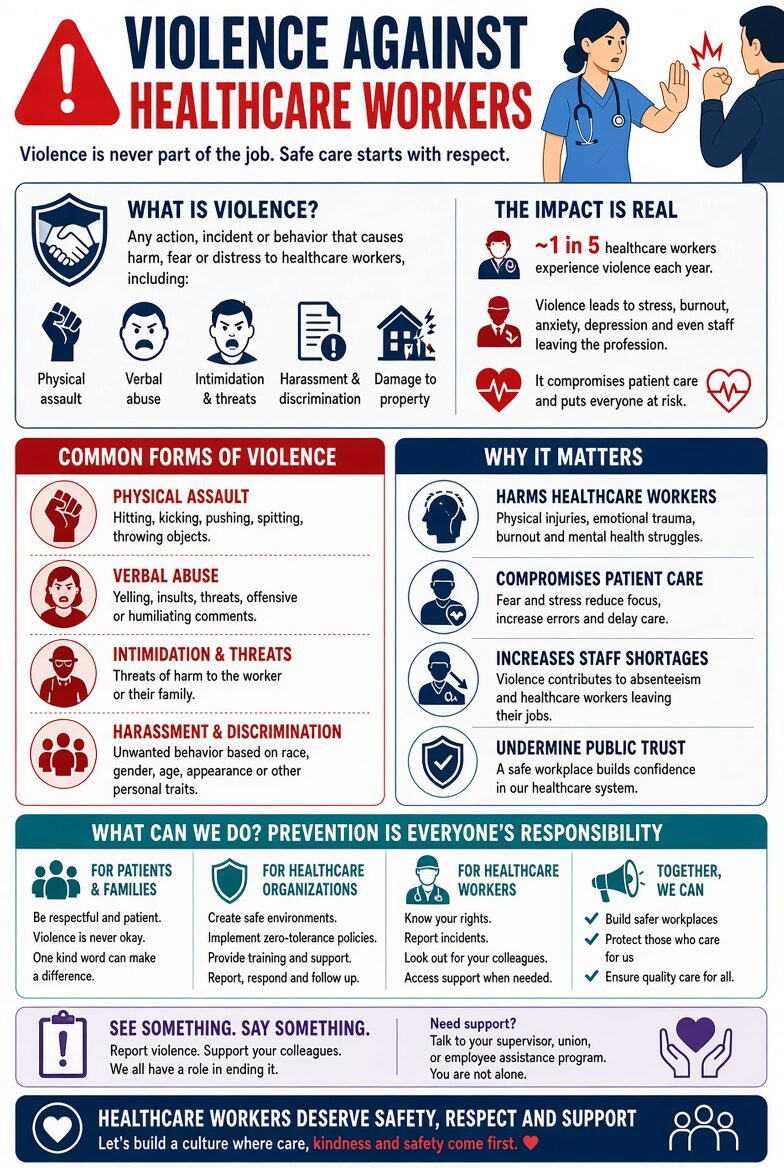
Violence against healthcare workers is a global problem. WHO estimates that roughly four in ten healthcare workers experience physical violence during their careers; when verbal abuse is included the figure exceeds 60 percent. High rates have been documented in China, India, and many conflict-affected settings. In 2025 the Safeguarding Health in Conflict Coalition recorded more than 2,500 incidents of violence or obstruction against health care in conflict zones, including hundreds of health workers killed or kidnapped. Some countries have strengthened legal protections; Spain’s recognition of assaults on healthcare workers as crimes against the state was followed by a reported decline in incidents. Overall, legal frameworks against workplace violence exist in about half of countries studied in the Care Compact analysis, but enforcement remains uneven.
Summary of country variation

Stronger legal protections and better working conditions are concentrated in Northern and Western Europe, where working-hour limits, union rights, and occupational safety laws are both written and relatively well enforced. Middle-income countries show mixed results: some have comprehensive laws on paper but weak enforcement, while others face high rates of workplace violence and long hours. Conflict-affected and low-resource settings combine limited legal safeguards with elevated physical risk to health workers. Across all regions, gaps in mental-health support for physicians and in non-discrimination protections are the most consistent shortfalls.
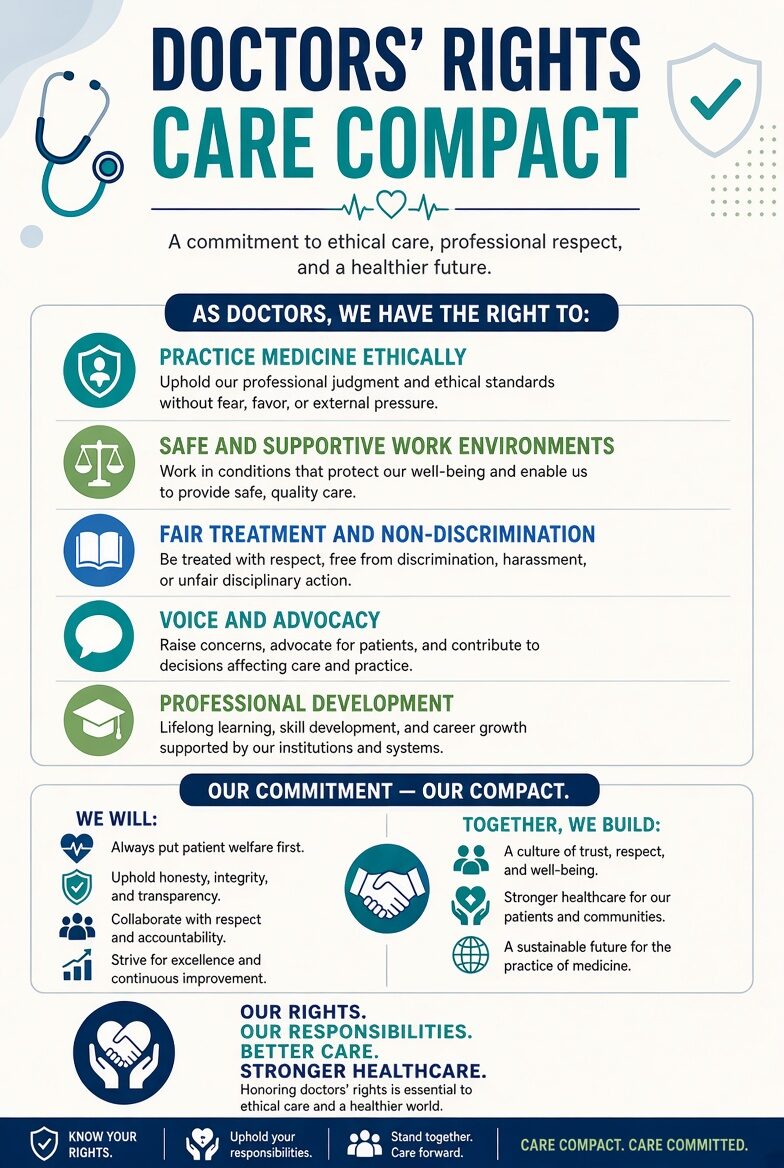
Doctors’ rights and protections differ widely by country. The WHO/Georgetown analysis of 182 countries shows that while occupational safety, pay, and association rights are relatively well covered in law, mental-health support and non-discrimination remain weak in most places. Working-hour limits are tightest in Europe and loosest for trainees in the United States and parts of Asia. Violence against healthcare workers is widespread, with particularly high reported rates in several Asian countries and in conflict zones. Closing these gaps requires both stronger legal frameworks and consistent enforcement.

Sources
WHO and Georgetown University. Laws for health and care worker protection and rights: A study of 182 countries. PLOS Global Public Health, 2024.
OECD Health at a Glance and related working-hour comparisons.
Safeguarding Health in Conflict Coalition reports on violence against healthcare in conflict, 2024–2025.
WHO estimates and national surveys on workplace violence against healthcare workers.
Comparative studies of resident working-hour regulations in high-income countries.
Research briefings by the gynecology.hospital editorial team summarise published studies and official data, and list their sources at the end of each article.