Age of Menarche Worldwide: Nutrition and Country Trends
Age at menarche has declined worldwide with improved nutrition and higher BMI. High-undernutrition countries still show later averages (15–16+ years), while high-income countries average 12.5–13.3 years. Organic food is not a major independent driver; overall energy balance and body composition matter most.

GLOBAL NEWS · RESEARCH BRIEFING
Age of Menarche Worldwide: How Nutrition, Lifestyle, and Socioeconomic Conditions Shape the Timing of First Menstruation
Secular trends, country differences between high-nutrition and undernutrition settings, and the limited independent role of organic diets
For publication on gynecology.hospital Editorial Team · 18 October 2026 · Category: Global News / Adolescent Health |
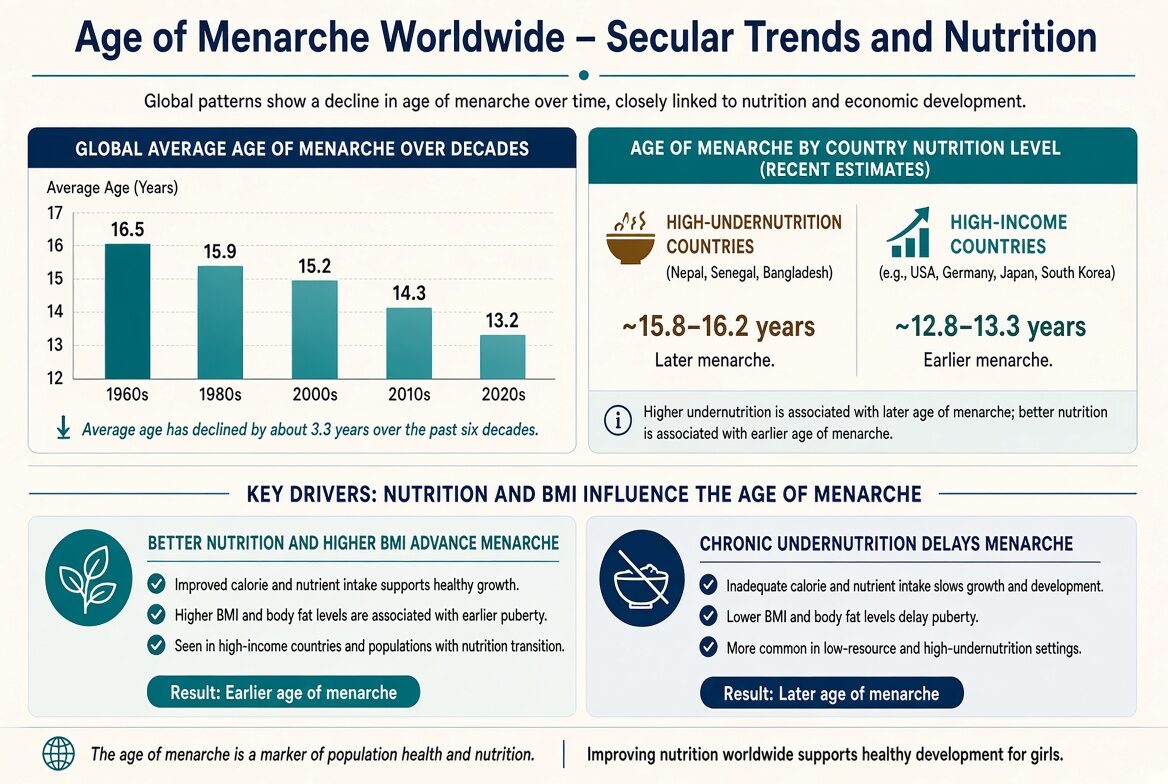
The average age of menarche—the first menstrual period—has declined substantially in most populations over the past century. This secular trend is tightly linked to improvements in childhood nutrition, higher body mass index, and better overall health. In high-income countries the average now commonly falls between 12.5 and 13.3 years. In countries with persistent undernutrition the average remains later, frequently 15 to 16 years or more. Organic food consumption, while often discussed in lifestyle contexts, does not appear to exert a strong independent effect on menarche timing once overall energy intake, body composition, and socioeconomic conditions are accounted for.
Secular trends and country patterns
Historical data from Europe, North America, and East Asia show steady declines. In Norway, mean age at menarche fell from around 15.4 years for women born in the mid-19th century to approximately 12.8 years for those born in the early 21st century. Similar declines of 0.5–1 year per decade were recorded in many populations during the 20th century as caloric intake and living standards rose. Recent country-level compilations place Nepal, Senegal, and Bangladesh among those with the latest averages (approximately 15.8–16.2 years), while most Western European, North American, and high-income East Asian countries cluster around 12.8–13.3 years. These differences track closely with childhood nutritional status and the prevalence of underweight versus overweight.
Nutrition as the dominant environmental driver
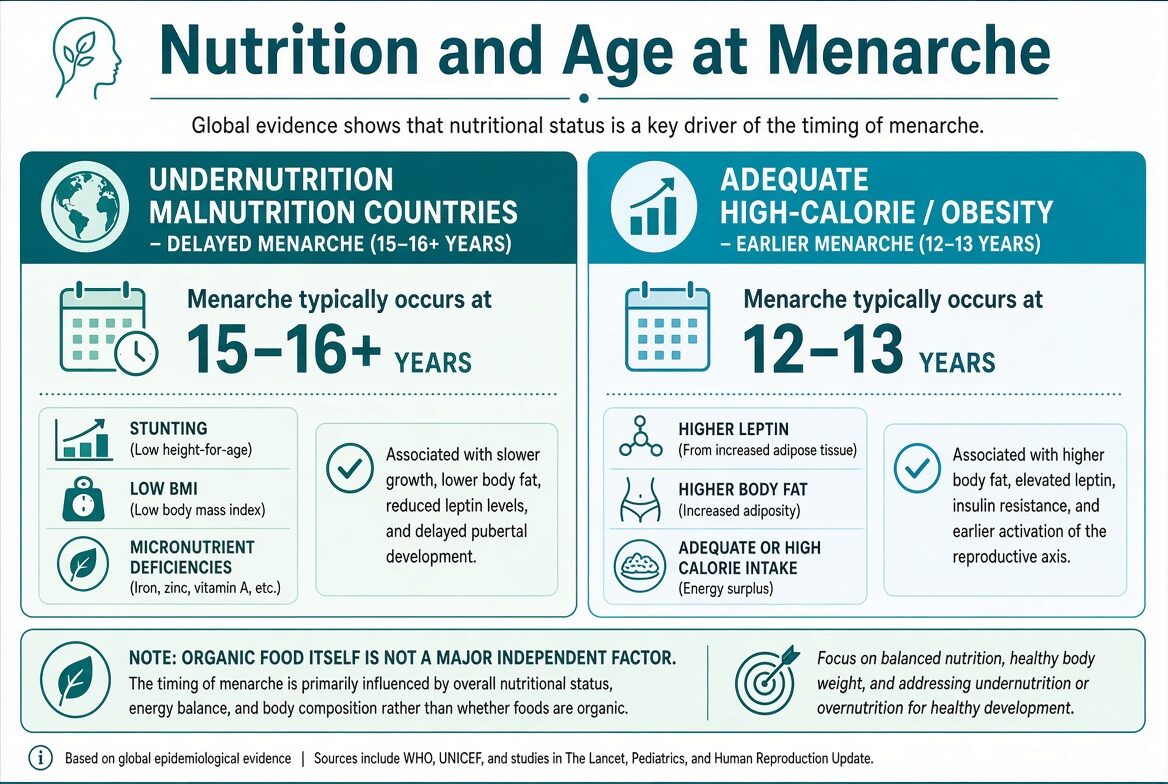
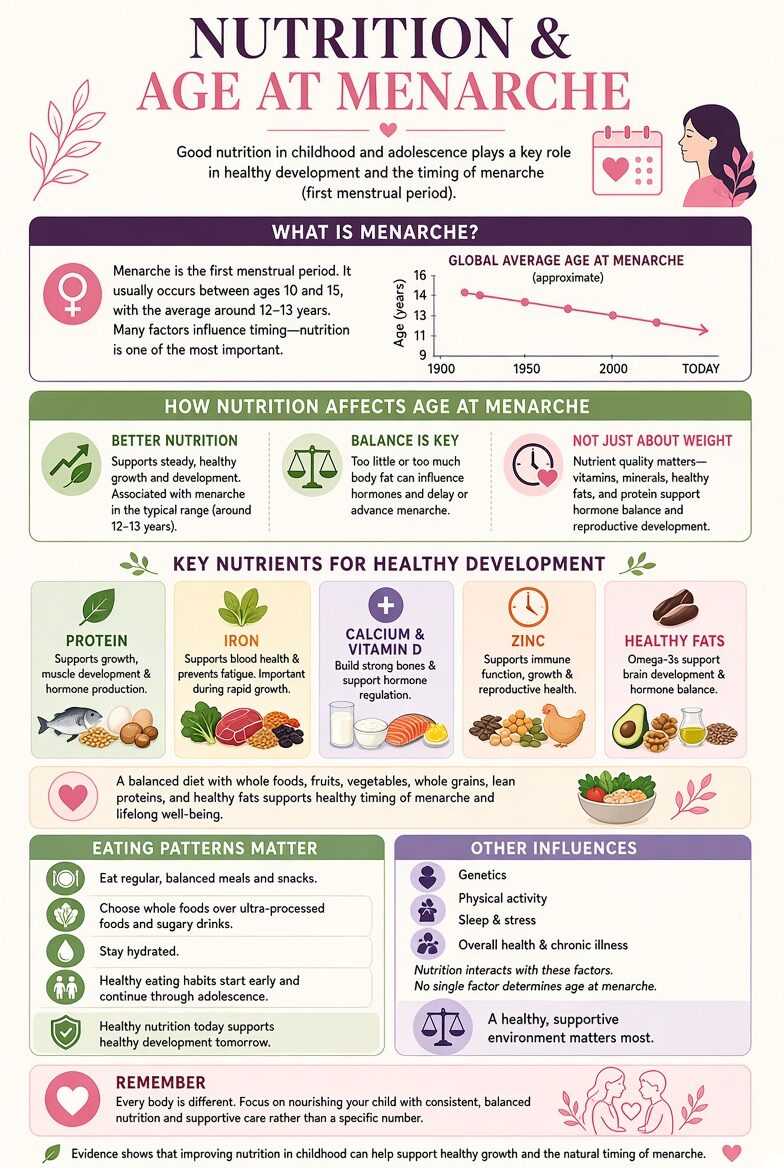
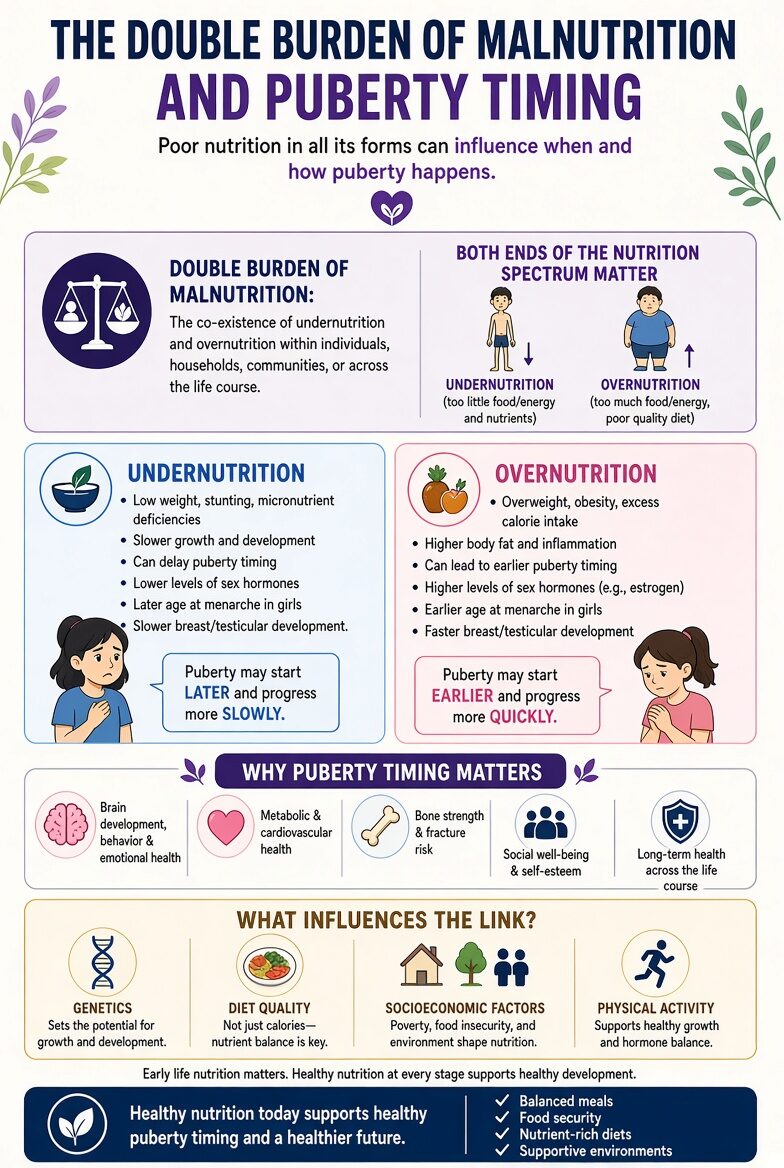
Chronic undernutrition, low body fat, and micronutrient deficiencies delay the activation of the hypothalamic-pituitary-gonadal axis. Girls with stunting or persistently low BMI reach menarche later. Conversely, higher energy intake and increased adiposity raise leptin levels and advance the timing of puberty. Meta-analyses have linked higher childhood intakes of energy, animal protein, and certain fats with earlier menarche, while higher fiber intake is associated with modest delays. The critical variable is overall nutritional status and body composition rather than the organic versus conventional status of individual foods. Countries with high organic-food consumption are predominantly high-income settings where menarche is already early because of long-standing nutritional abundance and rising childhood overweight.
The double burden in low- and middle-income countries
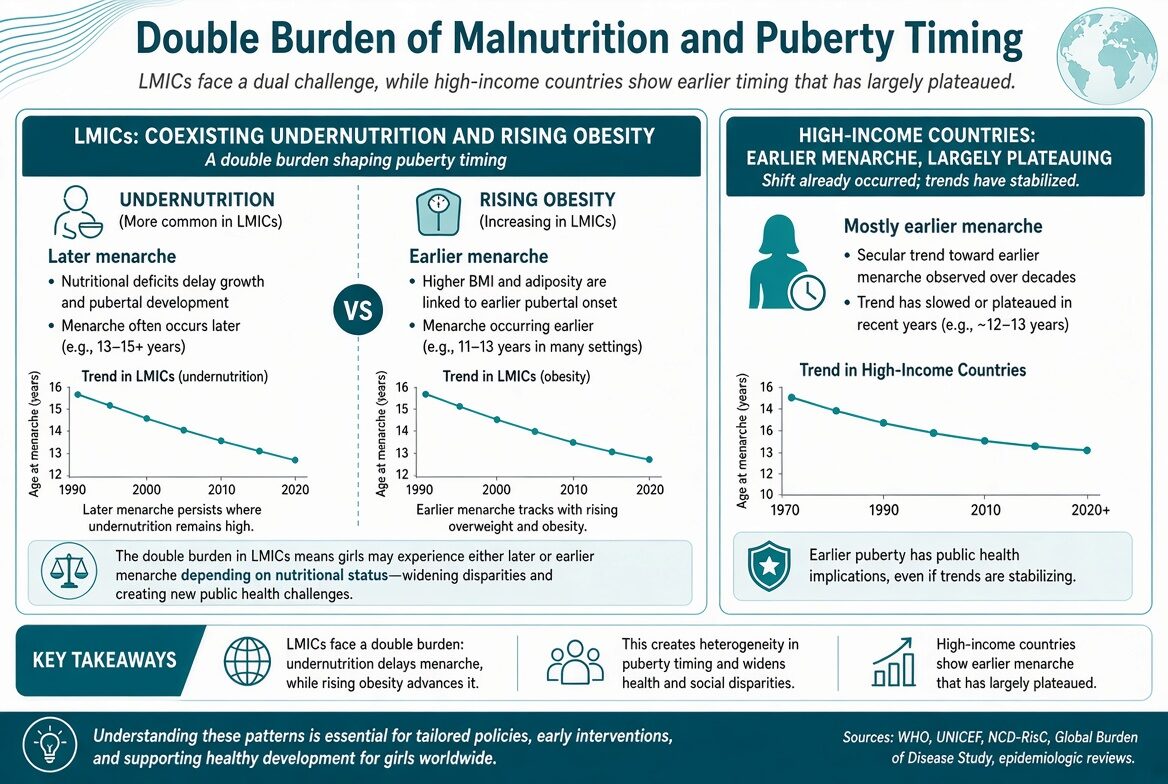
Many low- and middle-income countries now face a double burden: persistent undernutrition in some groups coexists with rapidly rising overweight and obesity in others. UNICEF’s 2025 Child Nutrition Report notes that childhood obesity has, for the first time, surpassed underweight as the more common form of malnutrition among children and adolescents aged 5–19 years globally. In these settings, girls from food-insecure households may still experience delayed menarche, while those exposed to high-calorie, ultra-processed diets experience earlier menarche. This heterogeneity widens disparities within the same country and complicates public-health messaging.
Lifestyle and other factors
Beyond nutrition, higher socioeconomic status, urban residence, and lower physical activity are associated with earlier menarche in most studies from South Asia and other regions. Stress, high levels of physical labor, and limited healthcare access tend to delay it. Genetic factors set a broad range, but environmental conditions—especially nutrition—explain a large share of the between-country and secular variation observed today.

Age at menarche continues to serve as a sensitive marker of childhood nutrition and population health. Improved caloric and nutrient intake has driven the global decline toward earlier menarche, while chronic undernutrition keeps averages later in several low-resource countries. Organic diets do not appear to produce a distinctly “more normal” timing independent of overall energy balance and body composition. The emerging double burden in many countries means that both delayed and accelerated menarche can occur within the same populations, underscoring the need for balanced nutrition policies that address both undernutrition and excess weight.

Sources
Country-level compilations of age at menarche (e.g., World Population Review and related epidemiological summaries).
Secular trend studies from Norway, China (Shanghai and national surveys), and multi-country analyses of Demographic and Health Surveys.
UNICEF Child Nutrition Report 2025 and related analyses of the double burden of malnutrition.
Systematic reviews and meta-analyses on nutrient intake in childhood and age at menarche.
WHO and related reports on childhood overweight, obesity, and undernutrition trends.
Research briefings by the gynecology.hospital editorial team summarise published studies and official data, and list their sources at the end of each article.