Advancing Global Maternal and Neonatal Health – Strategies for Mortality Reduction and the Role of Expert Leadership
This article provides an academic overview of global efforts to reduce maternal and neonatal mortality. It highlights the critical role of expert leadership, standardized protocols, and research-driven interventions, specifically in addressing preterm birth, a leading cause of neonatal mortality.
Advancing Global Maternal and Neonatal Health – Strategies for Mortality Reduction and the Role of Expert Leadership
1. Introduction
The rates of maternal and neonatal mortality are critical indicators of a nation’s health system strength, socioeconomic development, and commitment to human rights. While significant strides have been made globally over the past three decades, the burden of preventable deaths remains unacceptably high, particularly in low- and middle-income countries (LMICs). The International Federation of Gynecology and Obstetrics (FIGO) continually underscores the imperative for concerted global action to address these disparities.
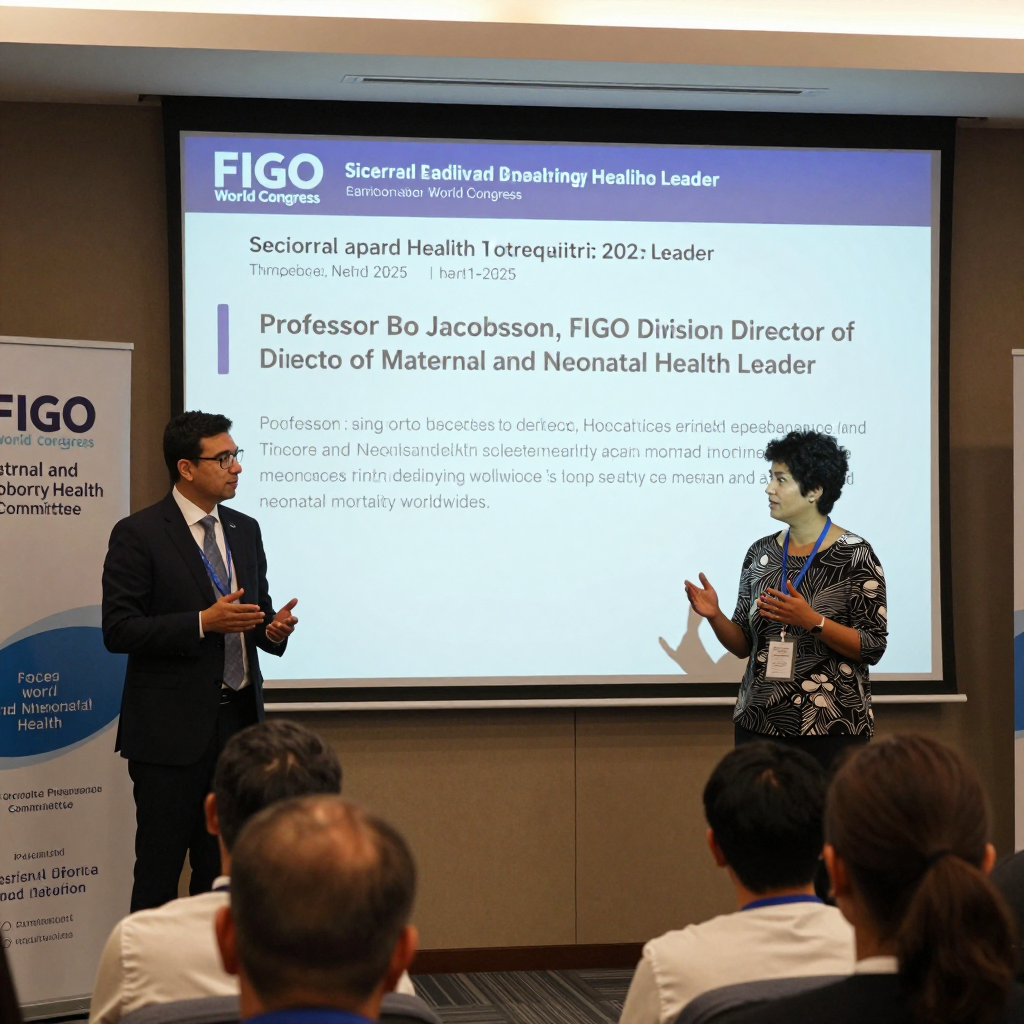
A pivotal element in this global effort is the recognition and mobilization of specialized expertise. Professional organizations like FIGO play a crucial role in highlighting leaders in the field whose work significantly impacts policy and clinical practice. A recent example of this is the recognition of Professor Bo Jacobsson for his lifelong dedication to preventing maternal and neonatal mortality. Professor Jacobsson, a distinguished obstetrician and researcher based in Scandinavia, has been instrumental in advancing our understanding of preterm birth and advocating for global maternal health initiatives. His career exemplifies how dedicated clinical research, combined with high-level advocacy, can drive systemic change.
This article provides a comprehensive academic review of the current strategies, challenges, and research priorities in reducing maternal and neonatal mortality, utilizing the context of expert recognition as a catalyst for discussion on global health mandates.
2. The Global Landscape of Maternal Mortality
Maternal mortality is defined by the World Health Organization (WHO) as the death of a woman while pregnant or within 42 days of termination of pregnancy, irrespective of the duration and site of the pregnancy, from any cause related to or aggravated by the pregnancy or its management.
2.1. Epidemiology and Current Trends
According to the Sustainable Development Goals (SDGs), the global target is to reduce the maternal mortality ratio (MMR) to less than 70 per 100,000 live births by 2030. However, current trajectories indicate that many regions, especially Sub-Saharan Africa and Southern Asia, will fall short of this target without accelerated intervention. The disparities are stark; a woman’s lifetime risk of maternal death is approximately 1 in 5400 in high-income countries, compared to 1 in 45 in low-income countries.
2.2. Leading Causes of Maternal Death
Approximately 75% of maternal deaths result from preventable obstetric causes. Clinicians and policymakers must focus on these primary direct causes:
Severe Hemorrhage: Particularly postpartum hemorrhage (PPH), remains the leading cause worldwide.
Hypertensive Disorders of Pregnancy: Including pre-eclampsia and eclampsia.
Sepsis: Infections, often occurring postpartum.
Unsafe Abortion: A significant preventable cause linked to restrictive legal frameworks and lack of access to reproductive care.
Obstructed Labor and other direct causes.
Indirect causes, such as pre-existing medical conditions (cardiovascular disease, diabetes, malaria, HIV/AIDS) aggravated by pregnancy, are increasing in relative importance as direct obstetric causes are better managed in some regions.
3. Neonatal Mortality and the Challenge of Preterm Birth
The neonatal period (the first 28 days of life) is the most vulnerable time for a child’s survival. In 2022, approximately 2.3 million children died in their first month of life, translating to 6,300 deaths every day.
3.1. Leading Causes of Neonatal Death
The primary causes of neonatal mortality include:
Preterm Birth Complications.
Birth Asphyxia (Intrapartum-related events).
Neonatal Infections (Sepsis, pneumonia, tetanus).
Congenital Anomalies.
3.2. Preterm Birth: A Critical Research and Clinical Priority
Professor Jacobsson’s recognition by FIGO is particularly significant given his extensive work on preterm birth (defined as delivery before 37 completed weeks of gestation). Preterm birth is the leading cause of death in children under five years of age and the single largest cause of neonatal mortality.
The pathophysiology of preterm birth is complex and heterogeneous, involving interactions between genetic predisposition, intrauterine infection/inflammation, uterine overdistension, and vascular dysfunction. Despite decades of research, the global rate of preterm birth remains high (approximately 10-11%).
4. Strategies for Preventing Maternal and Neonatal Mortality
Reducing mortality requires a synchronized approach that addresses clinical interventions, health systems infrastructure, and the socioeconomic determinants of health.
4.1. Optimization of Preconception and Antenatal Care (ANC)
Prevention begins before conception. Optimizing a woman’s health status prior to pregnancy (preconception care) is essential. Furthermore, the WHO recommends a minimum of eight ANC contacts to reduce perinatal mortality and improve the woman’s experience of care. ANC contacts allow for:
Early identification and management of risk factors (e.g., hypertension, diabetes).
Nutrition counseling.
Administration of prophylactic interventions (e.g., iron/folic acid supplementation, tetanus toxoid).
4.2. Intrapartum Care: The Critical Window
The majority of maternal and neonatal deaths occur around the time of childbirth (the intrapartum period). Access to Skilled Health Personnel (doctors, nurses, or midwives trained to manage normal deliveries and identify complications) is the single most important intervention. Furthermore, the provision of Emergency Obstetric and Newborn Care (EmONC) is crucial. EmONC is categorized into Basic (B-EmONC) and Comprehensive (C-EmONC). C-EmONC includes all functions of B-EmONC plus the ability to perform cesarean sections and blood transfusions.
4.3. Postnatal Care for Mother and Newborn
The WHO recommends postnatal care contacts within the first 24 hours, on day 3, and between days 7-14. Postnatal care facilitates the identification of PPH, eclampsia, and neonatal sepsis. Crucially, it provides an opportunity to support breastfeeding and provide contraceptive counseling, which are vital for birth spacing and reducing future risks.
4.4. Task-Shifting and Task-Sharing
In areas with acute shortages of specialized doctors, task-shifting—the rational redistribution of tasks among health workforce teams—has proven effective. Midwives and advanced practice nurses, when adequately trained and supported, can safely manage many functions of ANC, intrapartum care, and B-EmONC, significantly increasing access in LMICs.
5. Research Priorities in Maternal and Neonatal Health
The academic community must continue to drive research that informs policy and clinical guidelines.
5.1. Predicting and Preventing Preterm Birth
A major research frontier is developing accurate biomarkers or predictive algorithms to identify women at high risk of preterm birth early in pregnancy. Current screening tools (such as cervical length measurement) have limited predictive value in low-risk populations. Research into the vaginal microbiome, genomics, and proteomics holds promise for personalized preventive strategies (e.g., targeted progesterone therapy).
5.2. Implementation Science
The mismatch between existing evidence-based interventions and their implementation in the real world is a significant barrier. Implementation science focuses on understanding the contexts and processes that facilitate or hinder the uptake of clinical guidelines. This includes researching optimal ways to train health workers, improve supply chains, and overcome socio-cultural barriers to care seeking.
6. The Imperative for Data and Expert Leadership
A critical challenge in global maternal and neonatal health is the lack of reliable data, often referred to as "statistical invisibility." Many LMICs do not have robust Civil Registration and Vital Statistics (CRVS) systems. Professional leadership, as exemplified by Professor Jacobsson, is vital in advocating for better data collection mechanisms, such as Maternal Death Surveillance and Response (MDSR). MDSR treats every maternal death as a sentinel event that must be audited to understand the root causes and prevent future recurrences.
Expert leaders are also necessary to advise professional organizations like FIGO in updating clinical guidelines and representing the collective voice of obstetricians and gynecologists on the global stage. Professor Jacobsson’s background in Scandinavia, a region with excellent health registries and outcomes, provides a strong foundation for interpreting data and translating successful models into adaptable global strategies. His recognition serves to validate the importance of evidence-based research as the cornerstone of global health advocacy.
7. Conclusion
Reducing maternal and neonatal mortality remains a pressing global health priority that demands a multifaceted approach. The challenges are significant, particularly the persistent burden of preterm birth and the need for strengthening health systems in LMICs. However, evidence-based clinical strategies, combined with health systems strengthening and data-driven policy, offer a clear pathway forward.
Research briefings by the gynecology.hospital editorial team summarise published studies and official data, and list their sources at the end of each article.