Adolescent Abortion in Low-Income Countries
Global adolescent birth rates have declined since 2000, but absolute numbers of births and abortions among girls under 18 remain elevated in sub-Saharan Africa and other low-income regions due to population growth, limited contraception, and restrictive laws that drive unsafe procedures.

GLOBAL NEWS · RESEARCH BRIEFING
Adolescent Abortion Worldwide: Persistent Challenges in Low- and Middle-Income Countries
Trends in under-18 pregnancies and terminations, the concentration of risk in developing regions, and the limits of available data
For publication on gynecology.hospital Editorial Team · 17 October 2026 · Category: Global News / Adolescent Health |
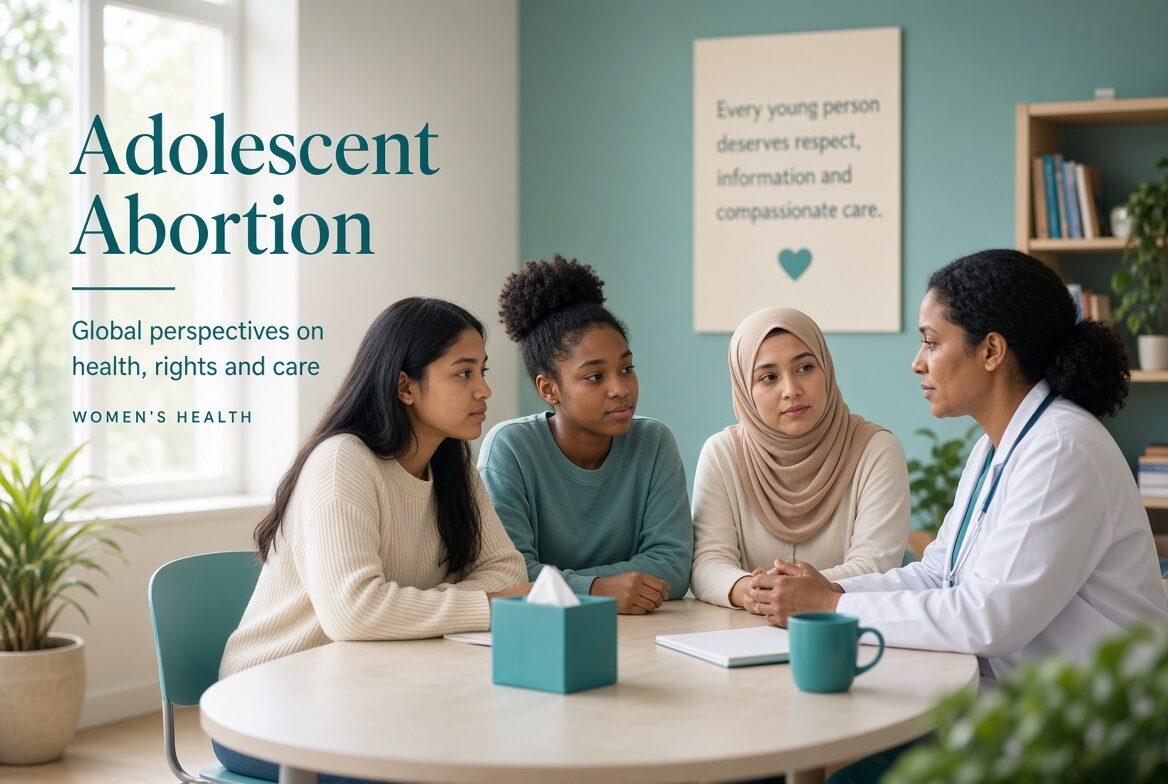
Adolescent pregnancy and abortion remain significant public-health issues, particularly in low- and middle-income countries. While global adolescent birth rates have declined substantially since 2000, absolute numbers of births to girls under 18 remain high in sub-Saharan Africa and parts of Asia and Latin America because of population growth. Reliable age-specific abortion data are limited in most developing countries, but available estimates indicate that a substantial share of adolescent pregnancies end in abortion, often under unsafe conditions where legal access is restricted. The combination of high unintended pregnancy rates, limited contraceptive access, and legal barriers continues to expose younger adolescents to elevated health risks.
Trends in adolescent pregnancy and abortion
UNICEF data for 2023 show that approximately 13 percent of adolescent girls and young women give birth before age 18 globally. The adolescent birth rate for ages 15–19 stood at 39 per 1,000, down more than 40 percent from 67 per 1,000 in 2000. For ages 10–14 the rate fell even more sharply, from 3.5 to 1.1 per 1,000. Sub-Saharan Africa continues to record the highest regional rates (approximately 93 births per 1,000 for ages 15–19 and 3 per 1,000 for ages 10–14). South Asia and Latin America have seen larger relative declines. Guttmacher and WHO analyses of unintended pregnancy and abortion indicate that, while conditional abortion rates among women seeking to avoid pregnancy have fallen in many regions, the absolute number of abortions remains large. Older country studies (pre-2015) found adolescent abortion rates ranging from single digits in some European settings to 11–44 per 1,000 in Mexico and selected sub-Saharan African countries where abortion was largely restricted. More recent comprehensive age-disaggregated global figures for under-18 abortions are sparse because many national systems do not report by single year of age or do not collect data where abortion is illegal.
Why the burden remains high in developing regions
Several structural factors sustain high rates of adolescent pregnancy and abortion in lower-resource settings:
Limited access to modern contraception and accurate information, especially for unmarried adolescents.
High rates of unintended pregnancy driven by early sexual debut, low contraceptive prevalence, and, in some contexts, sexual coercion.
Restrictive abortion laws that push procedures outside formal care; WHO estimates show that the proportion of unsafe abortions is substantially higher where laws are most restrictive.
Population momentum: even as rates decline, the absolute number of adolescent girls in sub-Saharan Africa continues to grow, so total births and abortions remain elevated.
Socioeconomic and educational barriers that delay or prevent care-seeking.
Health consequences and data gaps
Unsafe abortion contributes between 4.7 and 13.2 percent of maternal deaths globally, with nearly all of these deaths occurring in developing countries. Adolescents face additional risks from delayed care, incomplete procedures, and stigma that discourages post-abortion treatment. Estimates suggest that millions of adolescent pregnancies end in abortion each year, a large share of them unsafe. The absence of routine, age-specific abortion surveillance in most low- and middle-income countries limits precise trend analysis. What is clear from available birth-rate data, unintended-pregnancy studies, and clinic reports is that younger adolescents in high-burden regions continue to experience preventable morbidity linked to both unintended pregnancy and unsafe termination.
Adolescent abortion has not disappeared with falling birth rates. In many low- and middle-income countries the combination of high unintended pregnancy, restricted legal access, and incomplete contraceptive coverage means that a substantial number of girls under 18 still face abortion, frequently under unsafe conditions. Closing the gap requires both better age-disaggregated data and sustained expansion of contraceptive access and safe abortion services where they are legally available.
Sources
UNICEF. Early childbearing and teenage pregnancy rates by country, 2023 data.
Guttmacher Institute and WHO analyses of unintended pregnancy and abortion incidence, 1990–2024.
WHO. Abortion fact sheet and estimates of unsafe abortion contribution to maternal mortality.
BMJ Global Health and related analyses of adolescent fertility trends 1950–2023.
Older comparative studies of adolescent pregnancy and abortion rates in selected countries (pre-2015).
Research briefings by the gynecology.hospital editorial team summarise published studies and official data, and list their sources at the end of each article.